
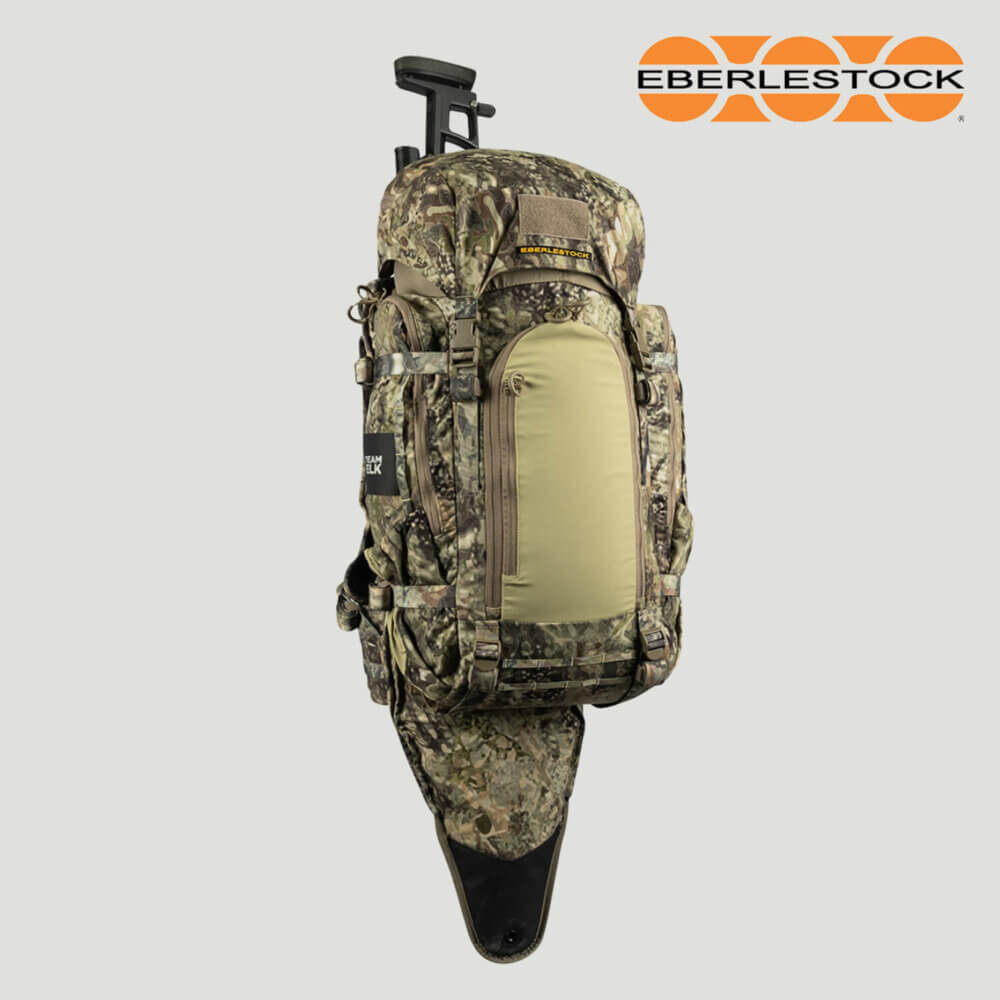
Eberlestock RMEF Team Elk Pack
A comfortable, rugged framed hunting pack that helped bridge the gap from New England hunting to western mountains, but its weight and scabbard limitations make it harder to trust for serious long-mile hunts.
 Matt Anderson
The comfort is undeniable, but for serious western miles, the weight and a few feature limitations are hard to ignore.
This was the author’s first real western hunting pack, bought for Montana because he wanted a frame, better load carry, and a rifle scabbard. It was a clear comfort and durability upgrade over the frameless and tactical packs he had used before, especially in hard weather and mountain terrain. Over time, the weight, spotting scope fit, limited rifle-carry options, and one costly scabbard mistake made it feel less ideal for serious western miles. It still has a place for hauling gear and shorter approaches, but the author would look lighter and more modular before buying again for the West.
What works. What doesn’t.
A clear look at where this gear earns its place and where the tradeoffs begin.
Pros
- Very comfortable once adjusted
- Carries weight securely on the hips
- No reported hot spots
- Major upgrade over frameless and tactical-style packs
- Quiet, rugged fabric
- Handles rough weather better than expected
- Useful rifle scabbard when used carefully
- Still useful as a general gear hauler
Tradeoffs
- Heavy for serious western miles
- Not an ultralight mountain hunting pack
- Scabbard can create real risk if forced
- Large spotting scope storage feels undersized
- Limited clean options for alternate rifle carry
- Less modular than the author would prefer now
- Exact current product status needs verification
The field story
The conditions, decisions, and repeated use behind the conclusion.
The First Real Western Pack
Before this pack, most of the author’s hunting was in New England, where a basic bag was enough for layers, snacks, and local days in the woods. Montana changed the requirements. He wanted a real frame for carrying mountain weight and a rifle scabbard that could keep the gun out of the way on early hikes.
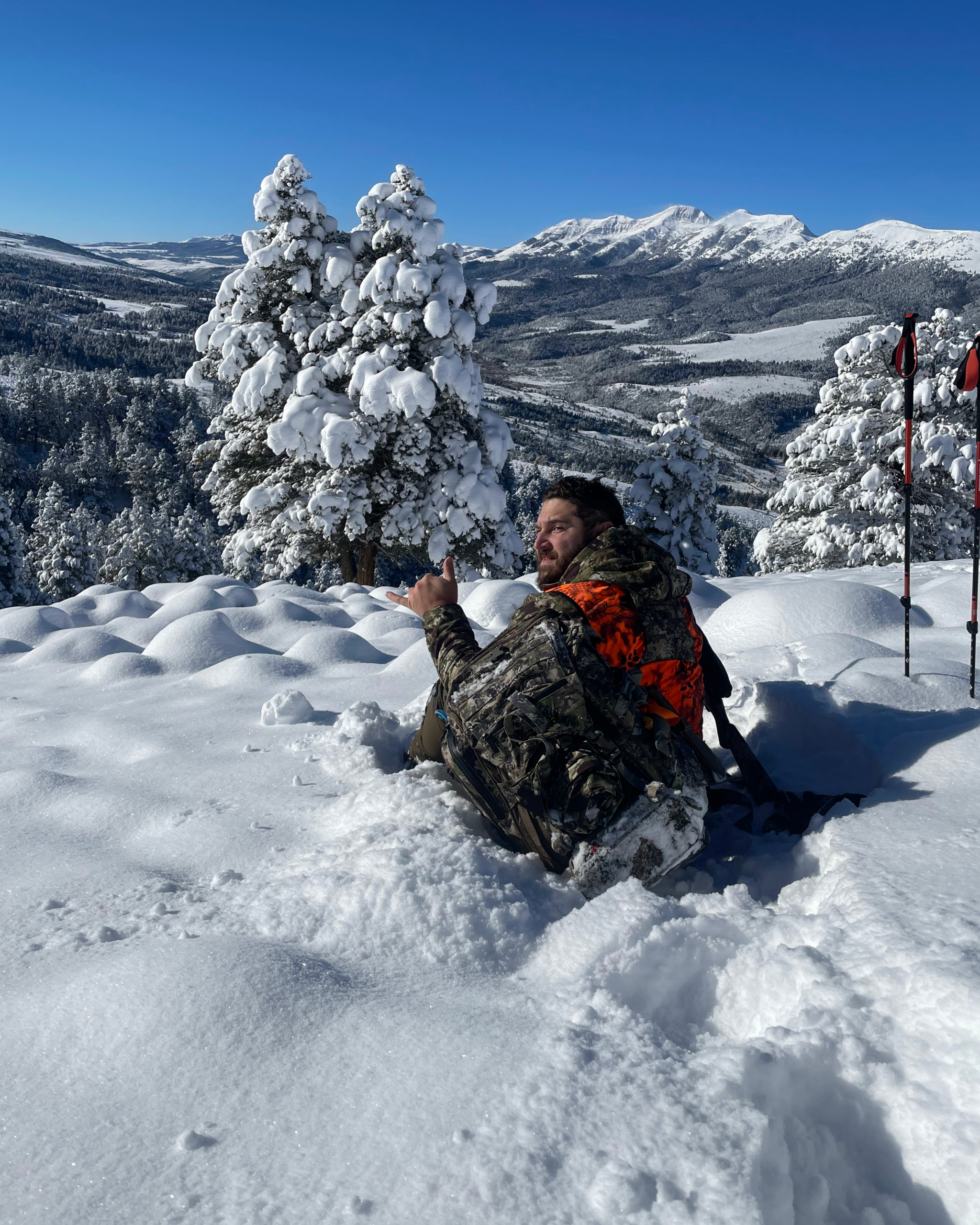
Coming from a frameless Slumberjack pack and a 5.11 Rush 72, this Eberlestock was an immediate upgrade. It carried better, felt more stable, and gave the author a more serious platform for a first western elk and mule deer hunt. That trip started around 55°F and sunny, then turned into roughly 11°F with 18 inches of snow in the mountains by day three. The pack handled that swing better than expected.
The early lesson was simple: a real frame matters. The later lesson was more complicated. Once the author had more time in the mountains, the pack’s comfort still stood out, but so did the weight, the scabbard risk, and the limits around optics and rifle carry.
It Still Has a Job, Just Not Every Job
This pack stays in the conversation because it earned real trust in comfort and toughness. It carried 30 lb hunting loads well in Montana, handled heavier training rucks, and still works for practical hauling, duck blind walks, and situations where comfort matters more than cutting every ounce.
That said, it no longer feels like the author’s answer for every western hunt. The more specific the mission gets — longer miles, lighter systems, faster rifle access, bigger optics — the more its limitations show. It has not been retired because it failed. It has been narrowed into the role it actually fits.
That may be the most honest place for it. Not the perfect western pack. Not a mistake. A rugged, comfortable tool that helped the author learn what mattered next.
The alternatives and the tradeoff
The closest alternatives I’d look at today are packs from Stone Glacier, Mystery Ranch, and Kifaru. The Eberlestock still stands out for comfort, durability, quiet fabric, and the integrated rifle scabbard, but it gives up ground in weight and modularity.
If I were buying specifically for long western hunts where every pound matters, I’d lean harder toward a lighter Stone Glacier or similarly streamlined system. Mystery Ranch makes sense if you want a proven framed hunting pack with a more conventional load-hauling layout, while Kifaru is appealing if modularity and custom carry options are a priority.
I’d still choose the Eberlestock for ruggedness, shorter approaches, and general hauling. For serious western miles, I’d now favor something lighter and easier to configure around optics and alternate rifle carry.
Performance metrics
The pack carried weight well once adjusted, with the load living on the hips and no reported hot spots. The author also used it for heavier training rucks around 50–55 lb without seeing load-carrying ability as the limiting factor.
The fabric felt quiet and well-built, handled a sharp Montana weather swing, and did not seem to let wet exterior conditions affect the inside of the pack during normal use.
The scabbard was useful for pre-dawn hikes and keeping the rifle out of the way, but forcing the rifle into the scabbard while the pack was loaded loosened the rifle’s pic rail and led to a missed shot.
The pack carried well but was not light. The author and guides both recognized that it was heavier than many modern western hunting pack setups.
The side pockets did not provide a good home for the author’s large, heavy spotting scope. A compact spotter may work better, but large optics created frustration.
Key takeaways
Comfort Matters Most When the Country Gets Steep
The biggest win was how the pack carried. Once adjusted, the weight stayed on the hips, rode securely, and felt like a major upgrade from frameless or tactical-style bags.
Heavy Packs Start the Day Behind
Even when a pack carries well, extra base weight still shows up on long mountain days. Comfort does not erase the cost of carrying more than needed.
A Scabbard Is Useful Until It Gets Forced
The rifle scabbard worked for hands-free hiking, but forcing a rifle into it while the pack was loaded caused a scope issue that cost a shot. That feature now gets used carefully or not at all.
Modularity Matters More After the First Trip
Early on, the author wanted a real frame and rifle scabbard. After more experience, lighter weight and cleaner rifle-carry options became more important.
Rugged Fabric Still Counts
The pack handled a hard Montana weather swing, stayed quiet, and kept the inside from feeling compromised even when the outside looked soaked.
Comfort Earned Its Place, But Weight Changed the Question
This pack proved itself as a comfortable, rugged step up from basic bags, especially on a first western hunt where the weather turned hard fast. But the longer the author spent around western systems, the more the weight, scabbard risk, and limited modularity mattered. It still has a role for hauling gear and shorter approaches, but for serious western miles, the lesson points toward something lighter and easier to adapt.
FAQ
Is this Eberlestock pack comfortable under weight?
Yes. Comfort was the strongest part of the author’s experience. Once adjusted, the pack rode securely, kept weight on the hips, avoided hot spots, and handled heavier training loads around 50–55 lb well enough that load capability did not feel like the main limitation.
Is this pack too heavy for western hunting?
It depends on the hunt, but weight is the author’s biggest concern. The pack carries well, but it is not an ultralight western hunting pack, and that extra starting weight matters on long mountain days.
Does the rifle scabbard work well?
The scabbard is useful when used carefully. It keeps the rifle out of the way during early hikes or hands-free movement, but the author no longer trusts it casually after forcing a rifle into the scabbard caused a scope mounting issue.
What is the safest way to use the scabbard based on this experience?
The author only uses it when the pack is not jammed full, inserts the rifle with the pack off, and stops immediately if there is resistance.
Can this pack carry a large spotting scope well?
Not in the author’s experience. The side pockets felt undersized for a large, heavy spotter. A compact spotting scope may work better, but large optics were frustrating.
How did the pack handle bad weather?
It handled the Montana weather swing better than expected. The pack is not waterproof, but even when the outside looked soaked, the inside did not seem impacted. On truly nasty wet days, the author used a pack cover.
Would the author buy it again for serious western miles?
Probably not without looking hard at lighter and more modular systems first. The pack still has a role for hauling gear and shorter approaches, but for serious western miles the author would be looking at lighter options.
KEEP EXPLORING