
Black Diamond Trail Back Trekking Poles — From “Maybe I’ll Bring Them” to Essential Mountain Gear
A steadily solid trekking pole for western hunters who need better stability, more controlled descents, and less strain over long days in steep terrain.
 Matt Anderson
They weren't just there to help me carry a heavy pack. They were helping me move better through the terrain.
I bought the Black Diamond Trail Back poles before my first western hunt without knowing whether I would actually use them. After struggling through the beginning of my first mountain ascent, I pulled them out and quickly realized how much difference basic stabilization could make. Across roughly 14 field days in Montana and Idaho, they earned my trust through climbs, descents, snow, mud, ice, and rock, and I would buy the same pair again based on what I have experienced so far.
What works. What doesn’t.
A clear look at where this gear earns its place and where the tradeoffs begin.
Pros
- Noticeable stability on steep and uneven terrain
- Particularly useful on descents
- Stayed valuable across roughly 20 to 35 pound pack weights
- Trekking baskets worked well in deep snow
- Held up through snow, mud, ice, and rocky terrain
- Comfortable grips during the field use described
- Easy to stow on my Eberlestock pack when I did not need them
Tradeoffs
- FlickLock could slip when I leaned on the poles harder than intended
- Carbide Tech Tips showed additional wear in rocky Idaho terrain
- I have not tested them under a true heavy meat pack-out
- I cannot compare them directly with another trekking pole system
The field story
The conditions, decisions, and repeated use behind the conclusion.
I Almost Left Them in the Pack
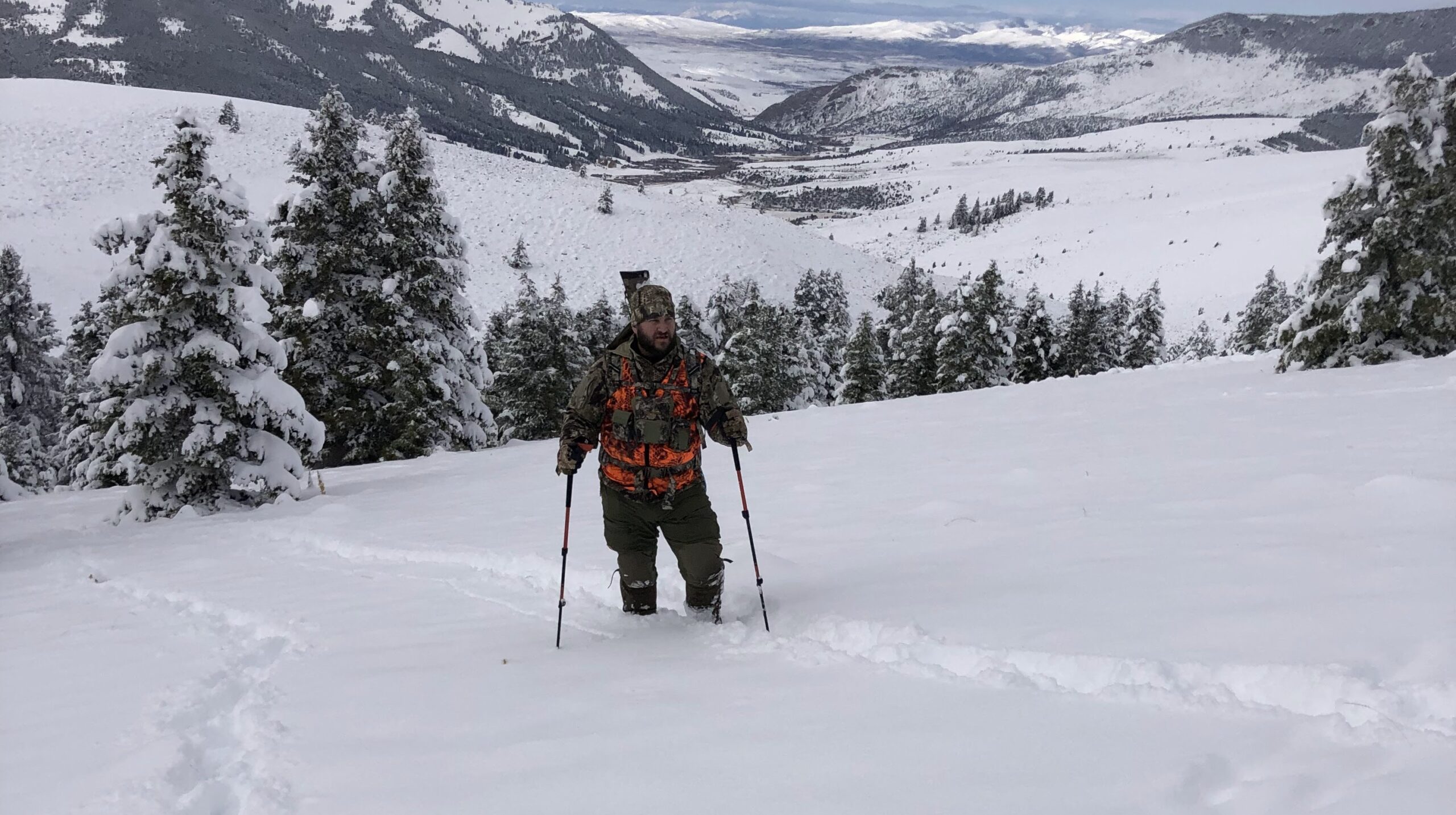
I bought the Black Diamond Trail Back poles before my first western hunt in Montana in 2022. I had no real experience carrying a pack for miles in the mountains at altitude, and I chose them mostly because Black Diamond had a strong reputation, they were available, and the research I did pointed me in their direction. Even then, I hesitated to use them. On the first climb, I left them packed away until struggling finally convinced me to put the ego aside. Once I started using them, the improvement in balance, pacing, and foot placement was obvious enough that they stayed with me every day for the rest of the trip.
They Make Movement Easier Without Trying to Do Too Much
The reason these stayed in my kit was not that they carried some massive load for me. Even after I figured out how badly I had overpacked and cut my load from around 35 pounds to closer to 20 to 25, I still wanted the poles. They relieved some of the work my stabilization muscles were doing, helped take pressure off knees that already had a lot of wear on them, and made descents noticeably easier. They also stayed easy to live with. When the terrain flattened out, I could attach them to the side of my Eberlestock pack without enough hassle to make me leave them behind the next time. Across Montana and Idaho, that combination of steady utility and low friction kept earning them a place.
The alternatives and the tradeoff
I cannot make a useful direct comparison with another trekking pole system because these were my first pair. I am sure lighter options may exist, but the Trail Back poles have never felt heavy enough to make me question carrying them. Based on my experience, I would buy the same pair again, while recognizing that a direct comparison still needs future field testing.
Performance metrics
Descending was where the poles made the biggest difference for me. They helped reduce pressure on my knees and made steep downhill movement feel more controlled.
The poles reduced the amount of constant balance correction I felt like I was making and helped make my pace and foot placement more intentional.
They remained useful when my pack was around 35 pounds early in Montana and after I reduced it to roughly 20 to 25 pounds later in the hunt.
Across roughly 14 field days in Montana and Idaho, I used them in snow, mud, ice, and rocky mountain terrain without developing a reason to replace them.
They attached easily to the side of my RMEF Eberlestock pack and were simple enough to stow that I never felt forced to keep using them once the terrain flattened out.
The grips stayed comfortable through the field use described, although longer-term grip and strap durability still needs further evaluation.
Key takeaways
Descents Changed My Mind
I expected climbing to be the hardest part. Coming downhill was where the poles earned the most trust by helping absorb some of the load and taking pressure off my beat-up knees.
Stability Matters Even With a Lighter Pack
Dropping my pack from roughly 35 pounds to 20 to 25 did not make the poles less useful. The benefit was not only load support. It was reducing constant balance corrections as I moved.
They Changed How I Moved
Using the poles made my pace and foot placement more deliberate. I felt like I spent less energy making tiny corrections on uneven ground.
Solid Across Changing Conditions
Snow, mud, ice, and rock never gave me a reason to stop trusting them. The trekking baskets worked in more than a foot of snow, and the poles remained useful across both Montana and Idaho.
Know What the Tool Is Supposed to Do
A few slips at the FlickLock happened when I was putting more weight into the poles than I should have. That taught me more about how trekking poles are meant to work than it did about the poles themselves.
They Did Not Need to Do Everything
What changed for me was not discovering some magic piece of mountain gear. It was understanding what trekking poles actually needed to do. They helped me stabilize, move more intentionally, take some strain off my knees, and handle terrain that was completely new to me. Once I understood that, they stopped feeling optional.
FAQ
Are the Black Diamond Trail Back trekking poles useful for western hunting?
Yes. They became essential gear for me on steep and uneven western terrain. Their biggest value was stability, more intentional movement, and reducing strain during descents.
Did they still help after you reduced your pack weight?
Yes. My pack started around 35 pounds and eventually came down to roughly 20 to 25 pounds, but the poles did not become noticeably less useful. That was what convinced me their value was about movement and stability, not only supporting a heavy load.
How did they perform in snow?
I used them in more than a foot of snow during the Montana trip. The trekking baskets did their job, and I did not have many issues.
How did they handle mud, ice, and rocky terrain?
They handled mud and ice without giving me any real problems. Idaho was rockier and put more wear on the carbide Tech Tips, but I still have not felt a need to replace them.
Did the FlickLock mechanism ever slip?
A few times, but only when I was leaning heavily on the poles. I came away feeling that I was asking more of them than a trekking pole was designed to provide rather than viewing it as a loss of trust in the locking system.
Are trekking poles a replacement for getting in shape?
No. One of my biggest lessons from that first hunt was that they help with stability and movement, but they do not replace physical conditioning.
Have you tested them on a heavy meat pack-out?
No. My mule deer was only a few hundred yards up a relatively flat game trail from the side-by-side, so I have not tested these poles under a genuinely heavy meat load.
How do they compare with other trekking poles?
I cannot make that comparison yet. These were my first trekking poles, so I do not have firsthand experience with another system.
KEEP EXPLORING