
The Jump Pack I Tested Before I Actually Needed It
A compact jump pack with built-in air that earned a permanent place in my truck by turning remote battery problems into quick fixes instead of long recoveries.
 Matt Anderson
It saved me from turning one stupid mistake into a several-hour recovery.
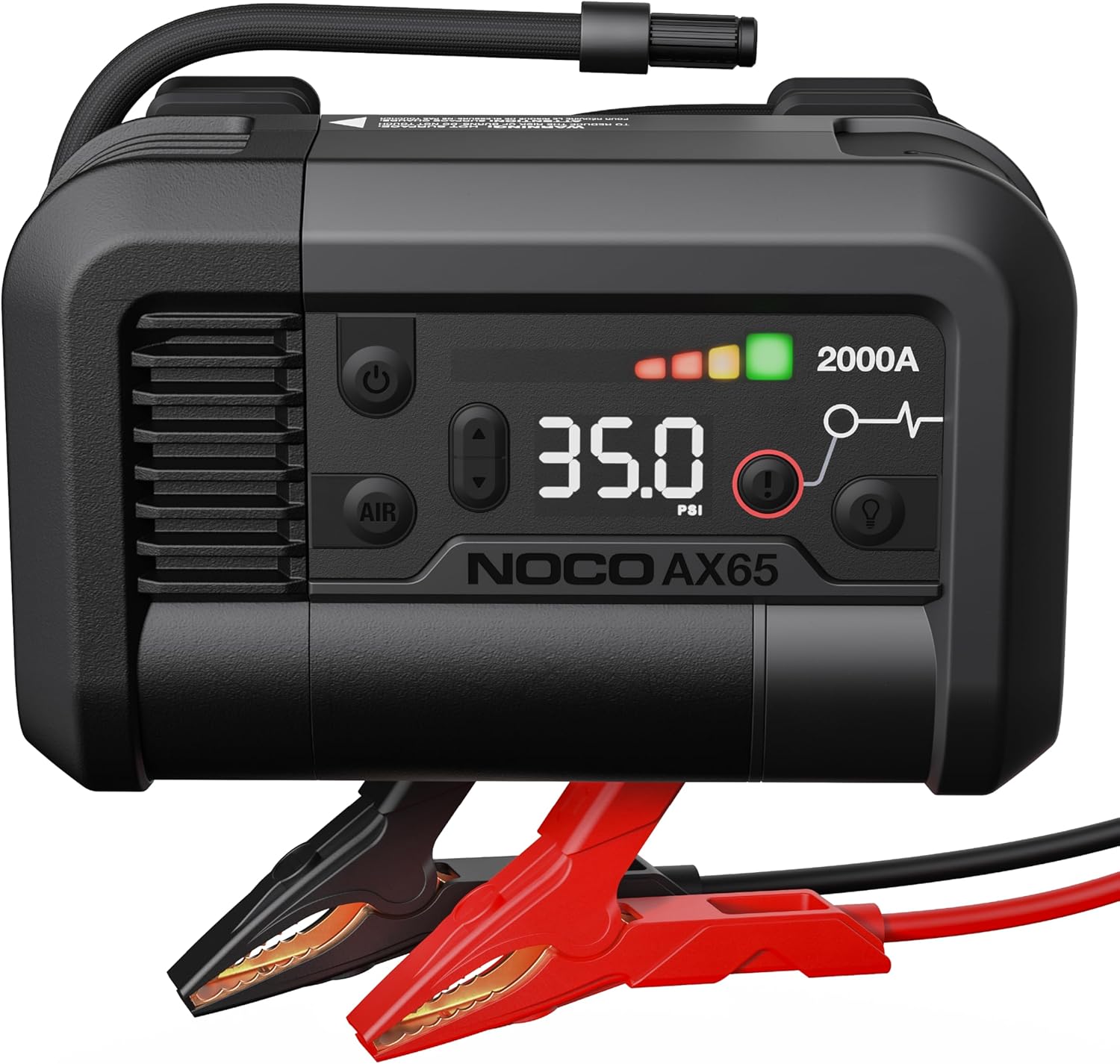
I bought the NOCO Boost+Air AX65 because I wanted more capability than my older GB40 and liked having air built into the same unit. After an easy first test with a low tire, it later started my truck on remote logging roads near Rangely, Maine, and a friend's Silverado after a fishing trip. It has proven exactly why I carry a jump pack, although the battery leads are frustratingly short.
What works. What doesn’t.
A clear look at where this gear earns its place and where the tradeoffs begin.
Pros
- Integrated jump pack and tire inflator
- Jumped two dead vehicles immediately in the situations described
- Inflator was simple to learn during a low-stakes test
- Compact body is easy to position
- Reduces dependence on another vehicle or roadside assistance in remote areas
Tradeoffs
- Battery leads are much too short
- Short lead length can make awkward battery layouts difficult to reach
- Compact body cannot fully compensate for limited cable reach
The field story
The conditions, decisions, and repeated use behind the conclusion.
More Than a Replacement for My Old Jump Pack
I had carried a NOCO Boost GB40 for years, and it had never really given me a reason to replace it. I bought the AX65 because I wanted an upgrade: more jump capability and, especially, onboard air in the same unit. The first opportunity to use it came when my TPMS showed one tire around 33 PSI instead of the roughly 40 PSI I normally run. That was almost the ideal introduction. The inflator felt faster and easier than I expected, and I got familiar with the AX65 before there was anything meaningful riding on it.
It Keeps Small Problems Small
The AX65 stays in the truck because it has already done exactly what I carry recovery gear to do. It started two dead vehicles without turning either situation into a bigger event, and the Rangely jump mattered most because there was no easy backup plan. I had an inReach and could have called for help, but that would have meant involving somebody 15 or 20 miles away and waiting for them to reach me. The AX65 let me handle the problem myself and keep moving. Now I make sure it is charged before trips.
The alternatives and the tradeoff
My direct comparison is the older NOCO Boost GB40 I carried for years. The GB40 had never failed me, so this was not a replacement driven by distrust. I moved to the AX65 because I wanted more capability and integrated air. That combination has made the newer unit more useful to me, although the narrative does not support broader performance, specification, or reliability comparisons between the two.
Performance metrics
The inflator felt simple to use during the first TPMS event, and I was comfortable with the unit before needing it for a remote recovery.
The AX65 started my truck immediately after the battery died on logging roads near Rangely, Maine.
It also started a friend's 2015 Chevrolet Silverado when that truck's battery unexpectedly died after a fishing trip.
The built-in inflator let me address a tire that had dropped to roughly 33 PSI from the approximately 40 PSI I normally run.
The leads were frustratingly short on the Silverado and forced me to position the AX65 awkwardly to connect both clamps.
In the Rangely event, the AX65 prevented a dead battery from becoming a multi-hour recovery involving a hunting buddy and satellite communication.
Key takeaways
Test It Before You Need It
My first AX65 use was a simple low-pressure tire, which gave me a chance to learn the unit without stress before I ever depended on it remotely.
Independence Matters More Off Pavement
Eight or nine miles from pavement without cell service, a dead battery is not necessarily dangerous, but it can become a long recovery problem fast.
Jump Power Has Been Immediate
The AX65 started my truck near Rangely and later started a friend's 2015 Silverado with a failing battery, both without drama.
The Leads Are the Real Compromise
The compact body is easy to position, but the short battery leads can give back some of that flexibility when terminals are awkwardly placed.
Not Every Emergency Tool Needs a Hero Story
The AX65 earned its place by saving time, dependence, and hassle. That is useful enough.
It Did Not Save My Life. It Saved My Day.
The Rangely situation is why the AX65 stays in the truck. I was not in a survival situation, especially with an inReach available, but one dead battery could have turned into hours of waiting on somebody else because of one stupid mistake. Instead, I hooked up the AX65 and left. That is enough for me.
FAQ
Have I actually used the NOCO Boost+Air AX65 to jump a dead vehicle?
Yes. I have used it to start my own truck after leaving auxiliary lights on near Rangely, Maine, and to start a friend's 2015 Chevrolet Silverado after a fishing trip.
Did the AX65 start the vehicles quickly?
Yes. In both situations described here, the vehicles started essentially immediately after the AX65 was connected.
Have I used the built-in air compressor?
Yes. Within a couple weeks of buying it, a TPMS warning showed my front-left tire at roughly 33 PSI instead of its usual approximately 40 PSI. I used that as a low-stakes opportunity to test the inflator.
Why did I replace my NOCO Boost GB40?
The GB40 had not failed. I wanted more jump capability and an integrated inflator, which the AX65 gave me in one unit.
What is my biggest complaint about the AX65?
The battery leads are much too short. They made connecting to my friend's Silverado awkward enough that I had to balance the AX65 to reach both connection points.
Is the AX65 mainly survival gear for me?
No. I think of it more as independence gear. Near Rangely, it saved me from turning a dead battery into hours of waiting for someone else to reach me.
Has carrying it changed how I prepare for trips?
Yes. I now make a point of checking that the AX65 is charged before any kind of trip.
KEEP EXPLORING