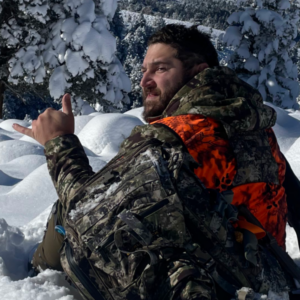
Another hiker got lost in the White Mountains recently. He left the trailhead in the morning, things started to fall apart as the weather turned, and by early evening he needed help finding his way out. This time, he made it home safe.
That outcome is not guaranteed, and we should stop treating these stories like they are just part of the scenery. These situations are not rare, and they are not unpredictable. They follow a pattern that shows up again and again, usually starting with a plan that feels completely reasonable. A day hike on a known trail with enough time to get back before dark. The plan itself is rarely the issue. What changes is the environment.
In the White Mountains, especially during the shoulder seasons, the conditions you start in are often not the conditions you finish in. It can feel mild and clear at the trailhead and still be full winter higher up. The wind picks up as you climb, snow sticks around in shaded sections, and a trail that felt obvious on the way in can disappear on the way out. None of that is unusual. It is exactly how those mountains work.
A wrong turn usually doesn’t feel like a big deal at first. It looks like a small deviation, or a path that seems like it might reconnect. You keep moving, assuming it will sort itself out. By the time you stop and actually check, you’re no longer where you thought you were, and getting back isn’t as simple as turning around.
This is where the situation starts to change.
Most people heading out are not being reckless. They are making reasonable decisions based on assumptions that don’t hold up. A phone feels like enough for navigation until there’s no service. A quick look at the forecast feels sufficient until elevation changes the weather entirely. A hike labeled “moderate” creates a sense of margin that disappears once conditions shift.
Most people don’t skip preparation because they don’t care. They skip it because the plan looks easy.
That’s where things start to break.
Preparation gets misunderstood as something extreme. People picture overpacking or acting like a survivalist, and it feels unnecessary for a simple day hike. No one expects to get turned around, so the “extra” gear gets left behind in the name of convenience. It’s an easy decision to make, and it’s usually the one that removes your margin when you actually need it.
Being prepared is not about overdoing it. It’s about giving yourself a little room for when things stop going according to plan. A downloaded map gives you a reference when the trail disappears and your phone is offline. A headlamp gives you options if your timing slips. A small battery bank keeps your phone usable longer than you expected. Water, some calories, and an extra layer give you a buffer when the temperature drops or the hike takes longer than it should.
None of that is overkill. It is just what being ready looks like.
Without that, small problems start stacking up. You move slower, you second-guess your route, and you try to fix things instead of resetting. Daylight starts to matter. Temperature starts to matter. What felt manageable a few hours ago turns into something you can’t easily solve on your own.
At that point, calling for help is the right move. But it should never be the plan. A working phone is a best-case scenario. There is always another version of that situation where the call doesn’t go through or the battery dies in the cold. Those are the outcomes that don’t always end with a ride back to the trailhead.
Every one of these stories starts the same way. A normal plan, conditions that change, and not enough margin when they do. They will keep happening as long as people head out without a clear understanding of what it means to be ready.
That part is something you can control.
This doesn’t need to keep happening.
We are building Guide to Wild to change that. The goal is to make preparation feel normal, not intimidating, and to make it clear what ready actually looks like—and what to do once you’re out there. Most people are guessing.
You shouldn’t have to.