Salomon X Ultra 5 GTX Review: A Reliable Everyday Trail Shoe

This article may contain affiliate links. If you choose to purchase through them, Guide to Wild may earn a commission. This never affects our testing or recommendations.

Pros

  • Comfortable right out of the box
  • Quicklace system is simple and reliable
  • Better support than expected for a low-cut shoe
  • Solid traction across typical trail conditions
  • Waterproofing works without issue
  • Holds up well over time

Cons

  • Occasional hotspot on longer days near pinky toe
  • Less support than a full hiking or hunting boot
  • Not built for heavy loads, deep snow, or highly technical terrain

Most people don’t need a full hiking boot.

They need something they can throw on, drive to the trail in, put a few miles on, and not think about their feet the entire time.

That’s where this shoe fits.

The Salomon X Ultra 5 GTX has been in rotation for about a year, with roughly 30 to 40 hikes across local Massachusetts trail systems. Nothing overly technical, but real terrain. Rocks, roots, mud, wet leaves, and the kind of conditions that expose weak gear pretty quickly.


The Basics

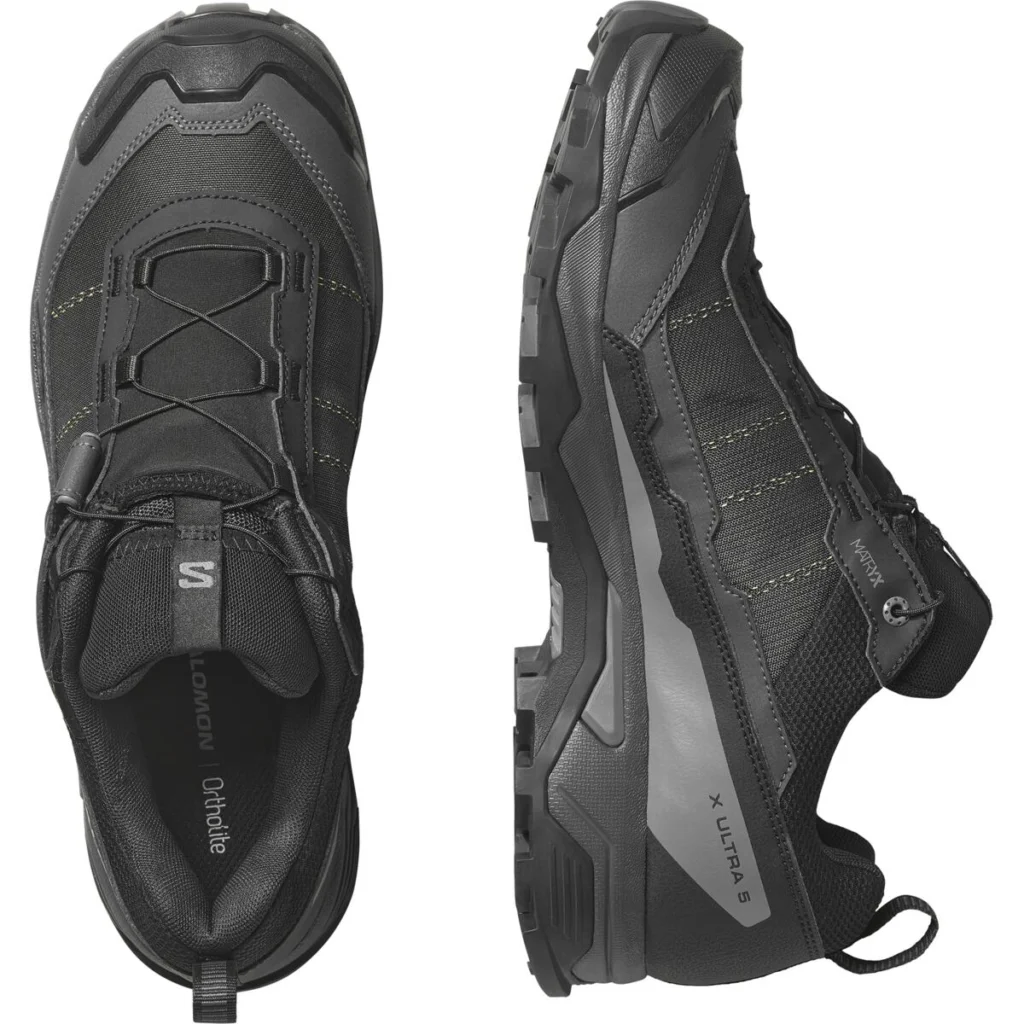
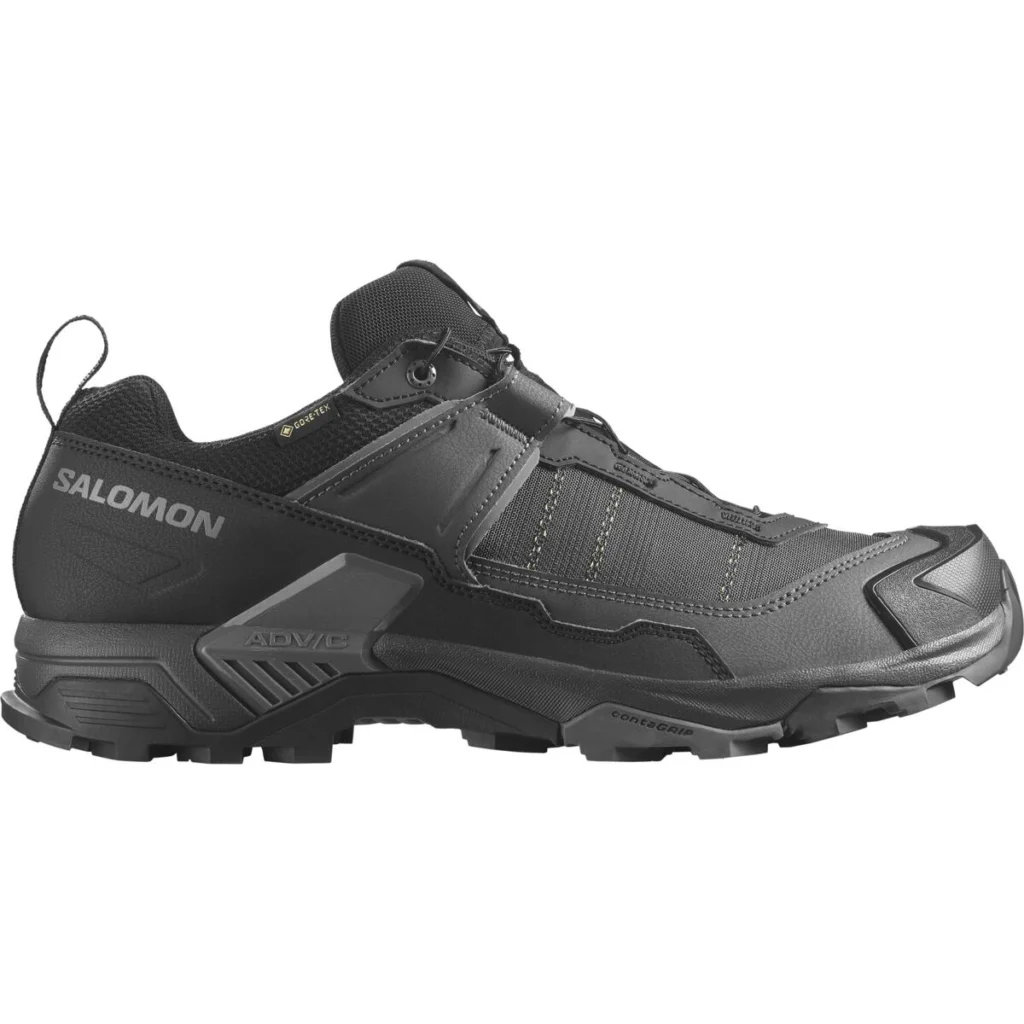
This is a lightweight hiking shoe with a waterproof Gore-Tex liner.

Fit is snug, almost more like a trail runner than a traditional hiking boot. It uses Salomon’s quicklace system instead of standard laces, which is one of the first things you notice.

There is no real break-in period. They felt comfortable right out of the box, broke in slightly, and still feel great after a year of use.


Why It Stays in the Kit

This is the shoe you grab when you don’t want to think about it.

Short hikes, quick trips, or days where you are mixing trail time with driving and running around. It covers a lot of ground without forcing you into a heavier boot.

The biggest surprise was the support.

Coming from a full-height boot like the Crispi Guide GTX, there was some hesitation going to a low-cut shoe. The Crispi is still the go-to for hunting, heavier terrain, and anytime there is real accumulation. But for normal trail use, the Salomon has felt more supportive than expected.

It fits into a simple system. Light, capable, comfortable, and easy to live in for a full day.


Where It Has Been Used

Most of the use has been on local Massachusetts trails:

  • Middlesex Fells Reservation
  • Harold Parker State Forest
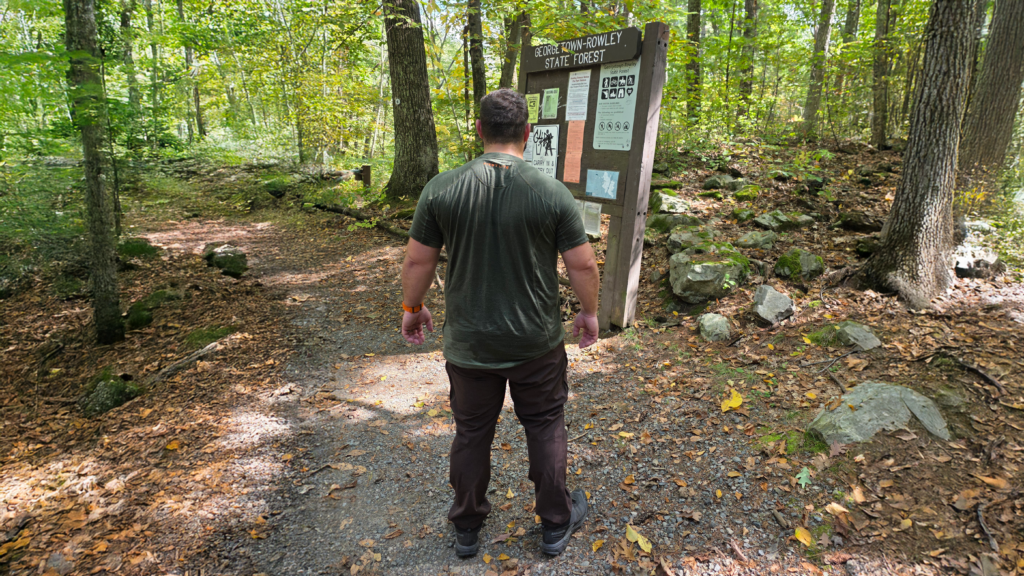
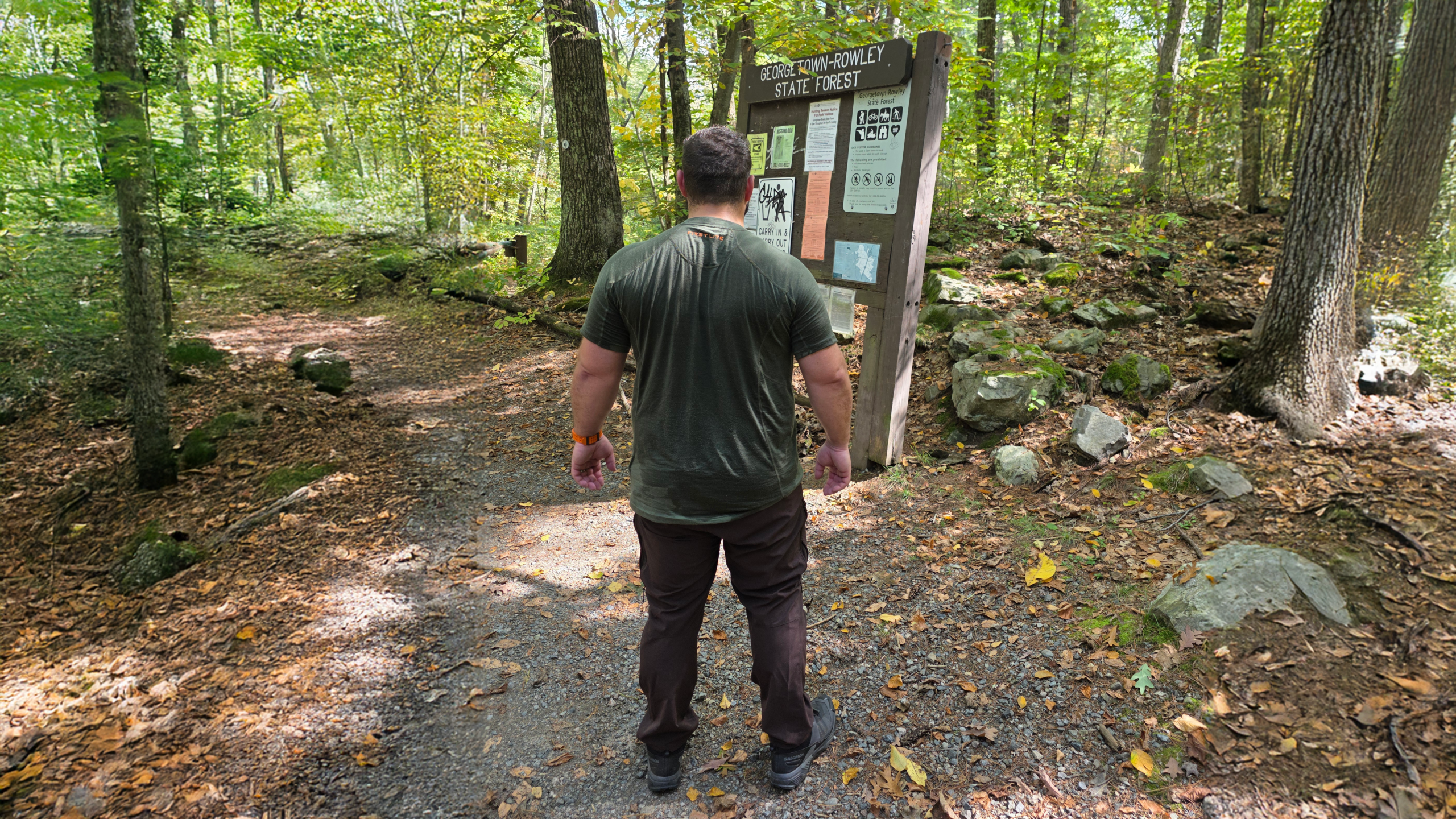
  • Georgetown-Rowley State Forest

Terrain is typical Northeast trail conditions. Rocks, roots, mud, wet leaves, and sections that get slick depending on the season. These are not groomed paths, and I also tend to leave the actual trail systems when the terrain allows it.

That matters because this kind of use exposes traction, fit, and comfort issues pretty quickly.


What It Does Well

Comfort is the first thing that stands out.

They felt good immediately and have stayed consistent over time. There was no real break-in period, and even after they loosened up slightly, they never started to feel sloppy.

The quicklace system is a big part of that. It is simple, fast, and once it is set, it stays put. No retightening mid-hike, no messing with knots, and no thinking about it once you start moving.

Traction has been solid across most conditions.

One of the only times it was even noticeable was during a late fall hike in Georgetown-Rowley State Forest. Wet leaves were covering everything, which is about as slick as it gets in the Northeast. There was a slight bit of slippage in spots, but nothing that felt out of control or unexpected for those conditions.

Outside of that, they have handled rocks, roots, loose dirt, and normal off-trail wandering without issue.

Waterproofing has also been a non-factor in a good way. I have not gone out of my way to seek out water, but I also do not actively avoid it. Wet trails, muddy sections, and normal exposure have never led to a moment where I noticed the Gore-Tex fail.

Durability has been solid as well. After a year of consistent use, they are holding up without any real concerns.


Where It Falls Short

The biggest issue has been occasional hotspots.

On longer days, especially anything in the 4 to 5 mile range combined with an hour drive each way, there can be some discomfort on the outside of the foot near the base of the pinky toe. It is not constant, but it shows up enough to be worth noting.

They also sit in an in-between category.

They are lighter and more flexible than a traditional hiking boot, but that comes with some tradeoffs if you start pushing into more technical terrain, carrying heavier loads, or dealing with deeper snow and real accumulation.

That said, they are more supportive than expected for a low-cut hiking shoe. For typical trail use, they never felt unstable or lacking.


Comparisons and Alternatives

If you are coming from a traditional hiking boot, these will feel lighter, more flexible, and easier to live in day to day.

That was the biggest adjustment coming from the Crispi Guide GTX. The Crispi is still the better choice for hunting, rougher terrain, heavier loads, and winter conditions where more boot makes sense. But for everyday hikes and local trail use, the Salomon is easier to wear and still provides enough support to feel secure.

If you are coming from a trail runner, the X Ultra 5 GTX offers more structure, protection, and waterproofing without feeling overly bulky.

They sit right in the middle, which is exactly why they work for a lot of people.


Who It’s For and Who It Isn’t

It’s for you if:

  • You are doing day hikes on mixed terrain
  • You want something lightweight and comfortable right out of the box
  • You value simplicity, especially with the quicklace system
  • You are dealing with typical Northeast trail conditions
  • You want more support than a trail runner without jumping into a full boot

Skip it if:

  • You need maximum ankle support
  • You are carrying heavy loads or getting into more technical terrain
  • You are hiking in deeper snow or real accumulation
  • You are sensitive to fit around the forefoot and prone to hotspots

Final Verdict

After a year of use, this is a reliable, easy choice.

It is not trying to be everything. It is a lightweight, comfortable hiking shoe that handles real trail conditions without drawing attention to itself.

And that is kind of the point.

For local hikes, mixed Northeast terrain, and days where you want more support than a trail runner without wearing a full boot, the Salomon X Ultra 5 GTX makes a lot of sense.

If you are looking for something you can throw on, hike in, and not think about your feet the entire time, this does that well.