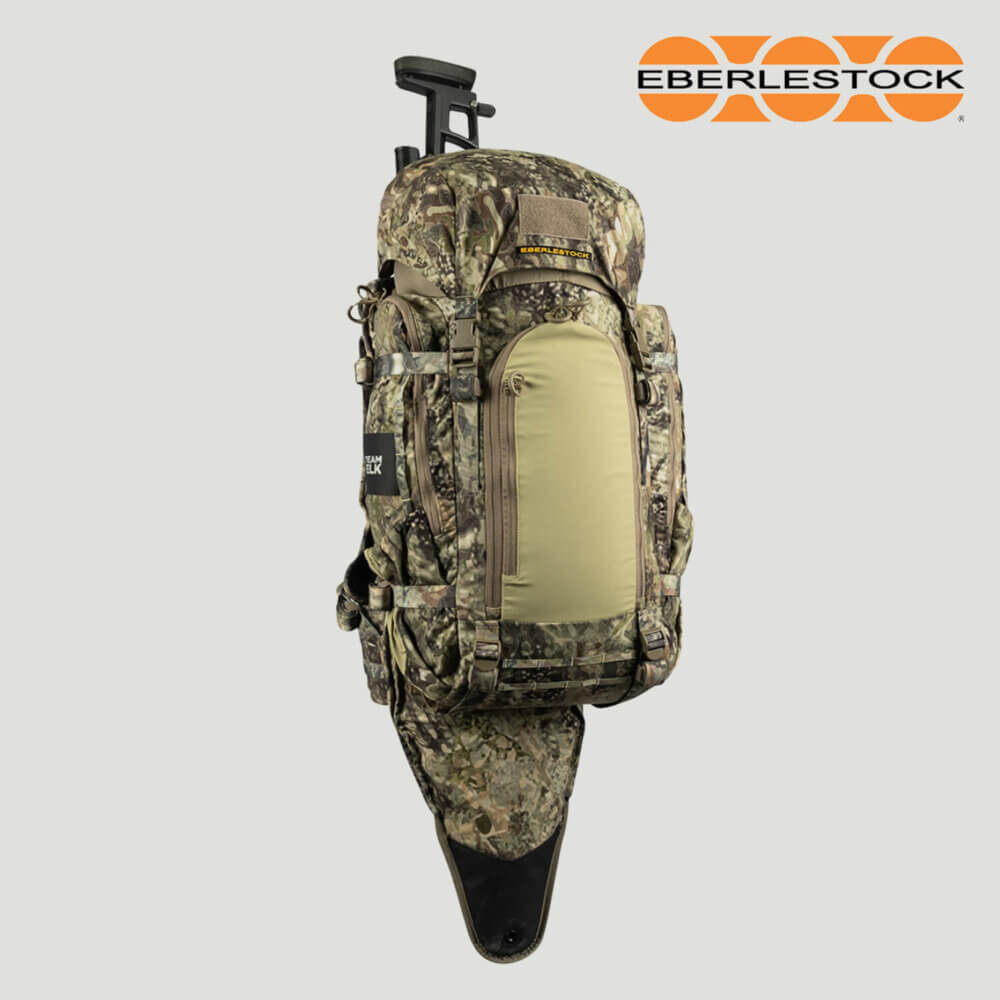
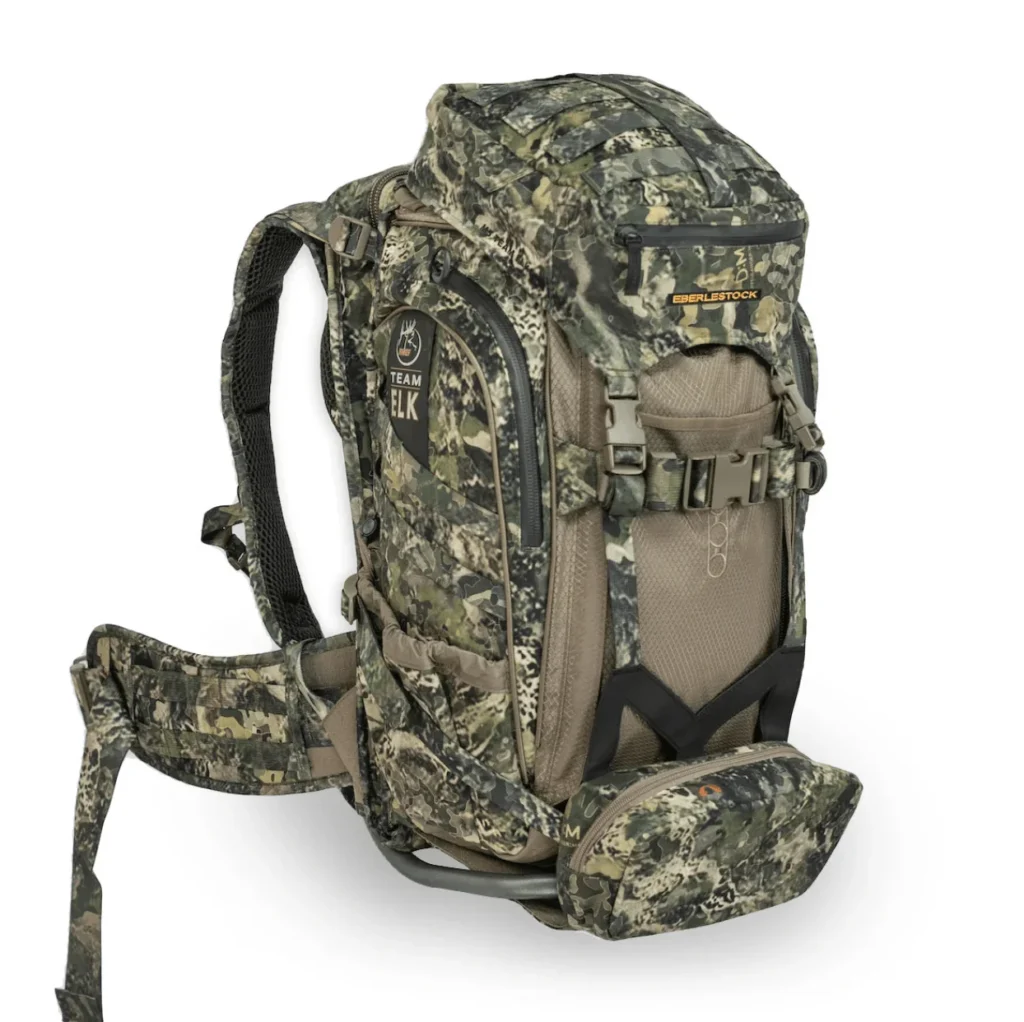
The Eberlestock RMEF Team Elk Pack is a framed hunting pack built around durability, comfort, and rifle carry via Eberlestock’s integrated scabbard system. I paid about $399 and have owned it since 2022, with roughly 30–45 days of actual field use.
I’ve used it in Montana, Idaho, and Maine, but the trip that taught me the most about it was a first western hunt in Montana in October 2022.
Why This Exists in the Kit
This was my first real western hunting pack. Before that, most of my hunting was in New England where a basic bag works fine for hauling layers and snacks.
I bought this pack because I wanted:
- A real frame for carrying weight in mountains.
- The rifle scabbard, especially for early hikes when I wanted the rifle out of the way and my hands free.
Coming from a frameless Slumberjack pack and a 5.11 Rush 72, this was an immediate upgrade in how it carried.
Where and How It Was Used
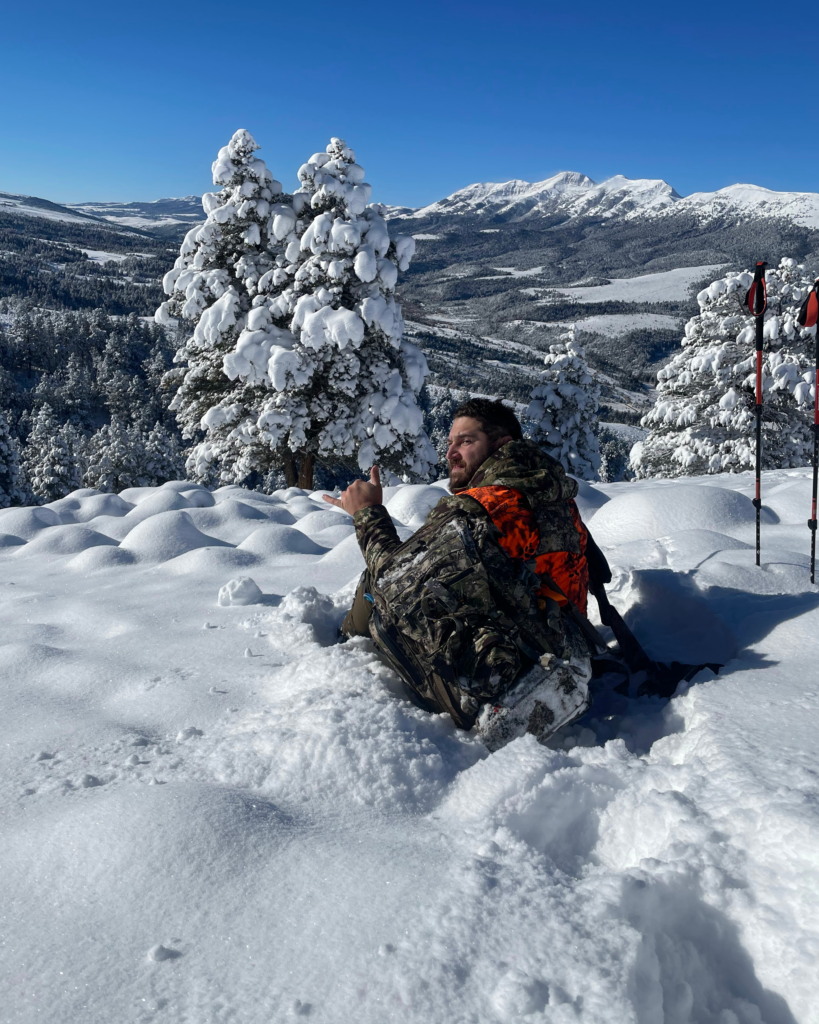
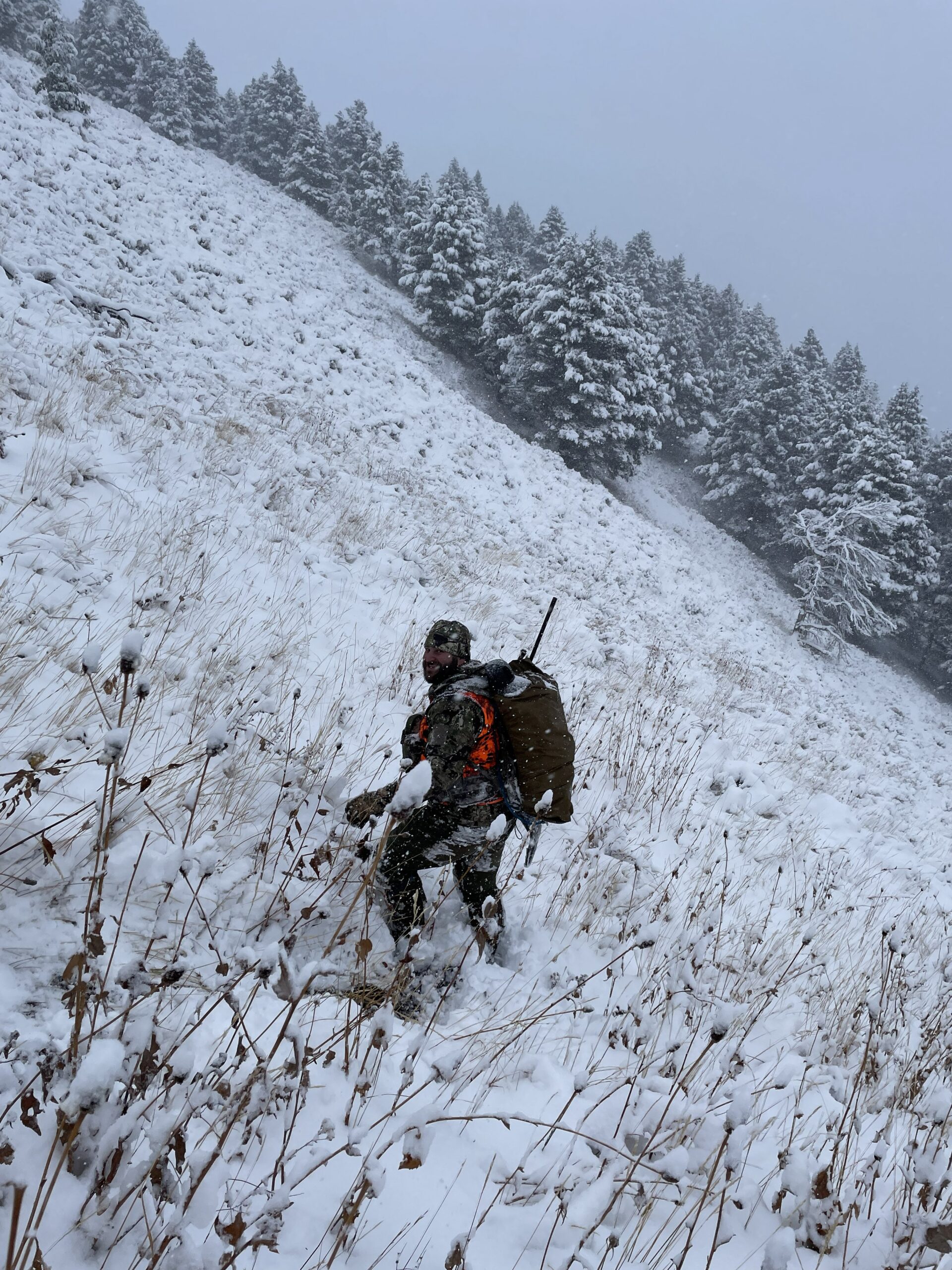
Montana, October 2022, elk and mule deer. We started in warm weather and got hit hard by winter fast.
- Conditions: 55F and sunny on arrival, then by day three it was about 11F with roughly 18 inches of snow in the mountains.
- Elevation: roughly 6,000–9,000 feet
- Typical load: about 30 lb, mostly food and layers, and I did a poor job managing weight because I was new to that kind of hunt.
I’ve also used it for practical hauling since then, including short walks to a duck blind and as a general gear hauler.
What It Does Really Well
Comfort and carry
For me, comfort is the best part of this pack. I’m about 6’0″ and 280 lb, and once I got the adjustments dialed, it rode solid and secure with the weight living on my hips. No hot spots. With heavier training rucks around 50–55 lb, it still carried well enough that I don’t see “heavy load capability” as the limiting factor here.
Compared to what I used before (frameless Slumberjack and a 5.11 Rush 72), this was in a different league for comfort and stability.
Fabric and field toughness
The fabric has been excellent. It’s quiet, feels well-built, and it handled that Montana weather swing better than I expected. The pack isn’t “waterproof,” but even when the outside looked soaked, the inside didn’t seem impacted. On truly nasty wet days, I used the pack cover.
Where It Falls Short
It’s heavy
This is the big one. The pack carries well, but it is not an ultralight western hunting pack. In practice that means you’re starting your day with more weight than you need, and guides I’ve hunted with agreed it’s heavier than what many people run now. On long mountain days, that matters.
Scabbard: great idea, real risk if you force it
The rifle scabbard is both the coolest feature and my biggest hesitation.
The utility is real. For pre-dawn hikes or when you want the rifle out of the way, it’s a good system. But I learned the hard way that the scabbard can punish user error.
On a Montana morning, a buddy tried to insert my Tikka .300 Win Mag into the scabbard while:
- the pack was on my back
- the pack was fully loaded
- we forced it when it didn’t want to go
It ended up loosening the pic rail on my scope. We didn’t realize it until I had a clean mule deer shot around 200 yards and missed. That’s a bad outcome from a small decision.
My rule now: I only use the scabbard if the pack is not jammed full, I insert the rifle with the pack off, and if there’s any resistance at all, I stop. If you’re the type who forces gear to work, this is not the feature to be casual with.
Spotting scope storage feels undersized
I run a spotting scope that’s too big and heavy, and this pack doesn’t have a great home for it. The side pockets feel undersized for that kind of optic. If you run a compact spotter, it might be fine. If you run a big one, expect frustration.
Limited options for alternate rifle carry
I like the idea of modular rifle carry options, like what some friends do with Kuiu-style setups where you can clip a rifle low at the waist belt and secure it up high for quick access, without forcing it into a scabbard.
I couldn’t find a clean way to replicate that on this pack. If you want a pack that’s easy to accessorize for different rifle carry styles, this one may feel limiting.
Comparisons and Alternatives
My direct comparisons are basic packs (Slumberjack, 5.11 Rush 72), and this Eberlestock is far better in comfort and build quality than either of those.
If I was buying again for serious western miles, I’d be looking harder at lighter and more modular systems. The brands on my radar are:
- Stone Glacier
- Mystery Ranch
- Kifaru
I also know Eberlestock has a newer version of this pack out. I haven’t tested it, so I can’t claim it fixes my issues, but it’s worth noting if someone loves the Eberlestock design approach.
Who It’s For and Who It Isn’t
It’s for:
- Hunters who prioritize a stable, comfortable carry and rugged build.
- People who want a framed pack that can do double duty as a gear hauler.
- Anyone who likes the concept of a scabbard and will use it carefully.
It isn’t for:
- Ounce counters and people trying to keep total pack weight as low as possible for long western days.
- Hunters who run a large spotting scope and want it to fit naturally in side pockets.
- Anyone who wants a pack that’s easy to set up with multiple rifle carry options besides the scabbard.
Final Verdict
I like this pack. The comfort is undeniable, and it feels well-built and quiet in the field. But for a true western hunting setup, the weight and a couple of feature limitations are hard to ignore.
The scabbard is useful, but it’s also the feature I trust the least after one real mistake cost me a shot. Some of that was on me, but gear should be judged by how it behaves in real-world use, including rookie errors that are common on a first western hunt.
If I’m going back west for serious miles, I’d be looking for a lighter, more modular option. For hauling gear and shorter approaches, this one still has a role.