
What Actually Holds Up in the Field
There is no shortage of opinions on YETI, and most of them tend to land in the same place. It’s expensive, it’s overbuilt, and depending on who you ask, you’re paying for the name as much as the product.
And honestly, some of that isn’t wrong.
But the longer you spend outside, especially on trips where your gear actually matters, the less that conversation holds up. At a certain point, you stop thinking about what something costs and start paying attention to whether it does its job without becoming a problem.
That usually shows up in pretty simple ways. How long does it actually hold ice? Does it leak after a few trips? Does it turn into something you have to manage, or does it just sit there and work the way you expect it to?
That’s where my opinion on YETI really comes from.
I didn’t go out of my way to build a collection. It just happened over time. A few pieces proved themselves early, and once they did, I kept reaching for them. Then a few more got added, and the same thing happened again.
This isn’t everything they make. It’s just the gear that stuck.
Start Here
The Pieces I Use the Most
If you’re trying to figure out where to start, this is it.
YETI Tundra 45
This is the cooler I reach for without thinking.
The size just works. Big enough for a full day, a weekend, or sitting in the truck ready to go. Not so big that it becomes a chore to move around. That balance matters more than you think.
What stands out over time isn’t anything flashy. It’s the lack of problems. It holds ice. It seals well. It doesn’t make you second guess whether you packed enough or need to grab more on the way.
You load it once and move on.
If you want the full breakdown, I went deeper here:
→ YETI Tundra 45 Deep Dive
This is the one I end up using the most. If you want to check it out, you can find it here:
[Check price on Amazon]
YETI Hopper M30
The M30 sits in a different lane than most soft coolers.
It’s not the smallest or the lightest option, and it’s not trying to be. It has more structure, more capacity, and feels a lot closer to a hard cooler in how it performs.
The magnetic closure is the first thing you notice. No zipper to fight with, no real effort to open or close it. It just works, and that makes a bigger difference than you’d expect when you’re in and out of it all day.
This usually comes with me when I want something more flexible than the Tundra 45 but still capable enough to rely on. Beach days, shorter trips, or anything where carrying comfort matters a little more.
If you want something more flexible than a hard cooler but still built to handle real use, this is a solid option:
[Check price on Amazon]
YETI Rambler Tumblers + Colsters
If we’re being honest, these probably get used more than anything else.
They’re always around. Morning coffee, water throughout the day, something cold at night. You don’t think about them much, which is kind of the point.
They just work.
The colsters are worth calling out. They feel unnecessary at first, but once you use one consistently, it’s hard to go back. It’s a small upgrade, but it’s noticeable, especially when you’re outside for a while.
If you want to take a closer look at their drinkware lineup, you can find it here:
[Shop YETI Drinkware]
What I Use Depending on the Situation
YETI Tundra 65
The 65 comes out when things get a little more serious.
More people. Longer trips. Situations where you’re packing once and expecting it to last.
It does everything the 45 does, just on a larger scale. You get more space, more capacity, and a little more confidence that everything is going to stay cold as long as you need it to.
You also get more weight. That part is real. This isn’t something I grab casually or toss in the truck without thinking about it.
But when you need the space, you need the space.
If you are comparing options across brands and sizes, I broke that down here:
→ Best Coolers for Camping
Not something I grab every trip, but when capacity matters, this is the one. You can check it out here:
[Check price on Amazon]
Truck Setup Integration
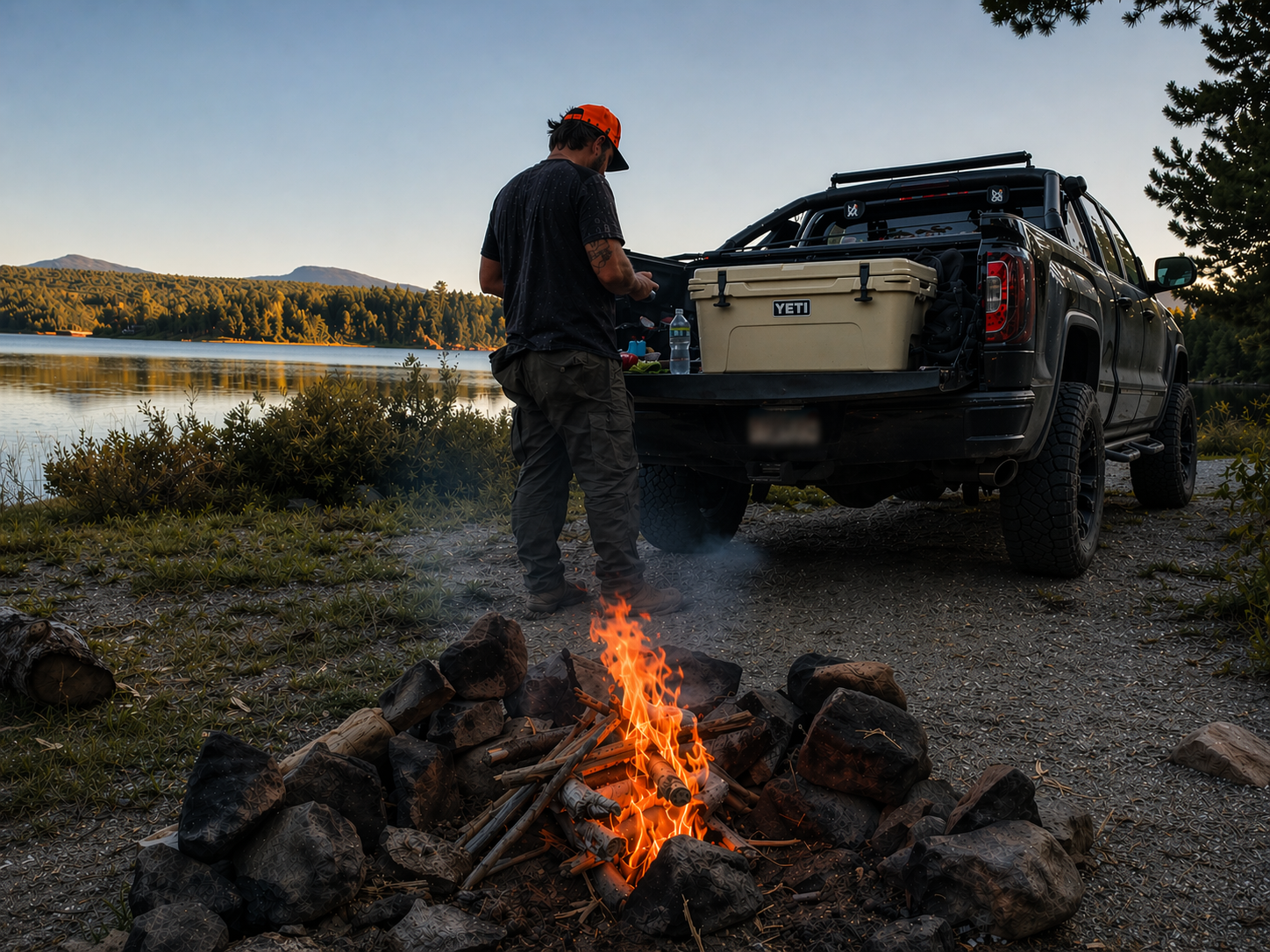
Most of this gear ends up living in the truck.
Coolers, drinkware, recovery gear, tools. Over time it all starts to work together as part of a system, especially if you’re moving between different environments.
YETI fits into that pretty naturally. It’s durable, predictable, and not something you have to babysit. Once it’s there, it just becomes part of the setup.
Which is exactly what you want.
If you want to see some of my other truck staples:
→ Truck Gear I Keep in the Bed
Where I’d Look at Alternatives
YETI isn’t the only option anymore. Not even close.
And in some cases, it’s not the most interesting one either.
The Brumate Brutank is a good example. It takes a different approach and adds some features that make it worth paying attention to, depending on how you use a cooler.
If you’re just chasing performance, there are a lot of solid options now. YETI still stands out to me for consistency and long-term durability, but it’s not the only path.
If you’re curious how it compares or want to see a different approach, it’s worth a look:
[Check price on Amazon]
The Bottom Line
YETI gear sticks around for a simple reason.
Once it proves itself, there’s not much reason to replace it.
It’s not perfect. It’s not cheap. But it does what it’s supposed to do without creating extra work for you. Over time, that matters more than anything else.
For me, the YETI Tundra 45 is still the centerpiece. Everything else fills in around it depending on the situation.
Start there.
You’ll figure out the rest pretty quickly.
This is not a sponsored piece. These are personal observations from time in the field. Some links may earn us a commission. It does not change what we recommend.
