
GEAR DEEP DIVE · FIELD TESTED

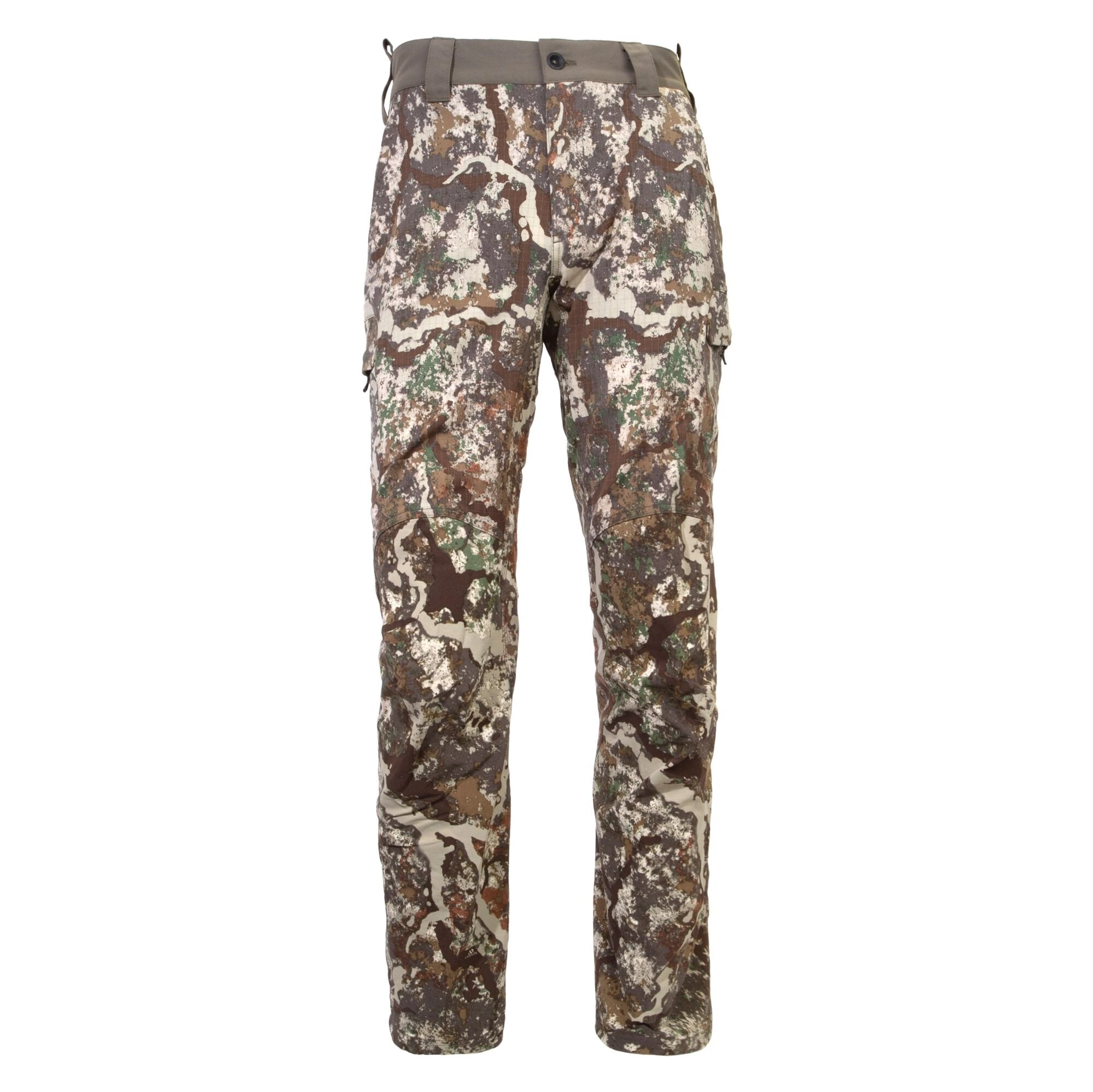
The First Lite Obsidian Foundry Pant: My Go-To for Warm Hunts in Rough Cover

After about three seasons and 30 to 40 wears, I keep coming back to the Obsidian Foundry when warm weather, lots of movement, and rough cover all show up at once.

BY Matt Anderson

•

Sep 14, 2026

•

FIELD-TESTED REVIEW

Some links on this page are affiliate links. If you purchase through them, we may earn a commission at no additional cost to you. As an Amazon Associate, we earn from qualifying purchases.

First Lite Men's Obsidian Foundry Pant in First Lite Specter

THE SHORT VERSION

At a glance

Price 200 Weight 21 oz Key Feature Ripstop merino body Best Use I like it best for warm, active early-season hunts, scouting, and hiking when I expect rough cover and want a balance of durability, comfort, and lower bulk.

THE FIELD VERDICT

Why it stays in the kit

I like the First Lite Obsidian Foundry Pant because it gives me a useful middle ground: lighter and less restrictive than the tougher pants I wore before, but durable enough that I trust it in New England brush. I do not use it as an everything pant. I reach for the Trace in hotter, cleaner conditions, and I want more insulation when I am sitting or glassing in cooler weather without a base layer.

WHAT WORKS

Pros

  • I have found it durable in whips, thick underbrush, and one hard deadfall catch.
  • I find the waistband comfortable and less restrictive than the tactical pants I wore before.
  • I like the balance of warmth, movement, and durability for many early-season conditions.

KNOW THE TRADEOFFS

Cons

  • I would like vents for easier heat dumping on hotter days.
  • I think it becomes more pant than I need around 80 degrees or hotter when cover is not nasty.
  • I want more insulation for long static periods below roughly 50 to 55 degrees without a base layer.

CURRENT OFFER

Check availability on Amazon

We may earn a commission at no extra cost to you.

VIEW ON AMAZON VIEW PRODUCT DETAILS

WHY I BOUGHT IT

The Job I Use It For

I use the Obsidian Foundry when it is warm enough that I do not want a heavy hunting pant, but I still expect rough terrain, whips, underbrush, or enough abrasion risk that an ultralight pant makes me nervous. That combination of movement, warmth, and cover is where the pant has made the most sense to me.

WHY IT STAYS

What Three Seasons Have Shown Me

The durability case for me is not abstract. I have pushed through thick Maine underbrush, worn the pant across hunting, scouting, and hiking, and once caught it hard enough on deadfall that I expected a tear. There was none. After three seasons, I am finally seeing some wear around the thighs, but I do not consider the pant compromised.

BEFORE YOU BUY

Frequently Asked Questions

THE DEEP DIVE

The full field story

The conditions, decisions, and repeated use behind the conclusion.

Why I Bought Them for Idaho

I originally bought the Obsidian Foundry ahead of an Idaho elk hunt. As the trip got closer, we realized it would be warmer than expected, but we still knew we would be moving enough that a stiff or restrictive pant would be a problem. Around the South Fork of the Salmon River at roughly 8,500 feet, that balance started to make sense to me.

New England Brush Is the Test I Trust

The whips and thick underbrush I hunt and scout through in New England can be brutal on lighter pants. One scouting day, deadfall grabbed the Obsidian Foundry hard enough that I expected a tear when I looked down. There was nothing. After three seasons I can finally see some thigh wear from that kind of cover, but I still would not call the pant compromised.

The Waistband Is a Bigger Deal Than I Expected

I do not have a technical way to describe the waistband. It simply wears more like the waistband on a pair of stretch sweatpants than what I expect from a tough hunting pant. With suspenders, I find it especially comfortable. That is a noticeable change from the 5.11 tactical pants I wore before, which almost required a stiff tactical-style belt for me.

Where I Choose the Trace Instead

I own the First Lite Trace and like it too, but I prefer the Obsidian Foundry for most of the conditions I actually hunt in because it feels far more durable to me and slightly warmer. If it were around 80 degrees or hotter and I knew I would not be pushing through nasty cover, I would reach for the Trace instead.

Why I Do Not Treat It as an Everything Pant

The cooler end matters too. If temperatures are dropping below roughly 50 to 55 degrees and I am going to sit or glass for a long time without a base layer, I start wanting more insulation. Those boundaries are personal estimates, but they define the window where this pant works best for me.

BOTTOM LINE

Key Takeaways

DECISION SUPPORT

How it compares

I see the First Lite Trace as the better tool for me when it is around 80 degrees or hotter and I do not expect nasty cover. The Obsidian Foundry feels far more durable to me and slightly warmer. My older 5.11 tactical pants are not a direct competitor, but they give me a useful comfort reference because I found their belt setup more restrictive.

FINAL THOUGHTS

A Specific Tool I Keep Reaching For

I keep reaching for the Obsidian Foundry because its specific window overlaps with a lot of my early-season hunting: warm weather, plenty of movement, and rough enough cover that I want more confidence than I get from an ultralight pant. I would still choose the Trace for extreme heat without nasty cover, and I would want more insulation for long static periods in cooler weather. If I could add one thing, it would be vents so I could dump heat more easily on the hottest days.

BUILD THE SYSTEM

See where it fits

A piece of gear only makes sense in the context of the rest of the kit. See how individual products, weather, movement, and tradeoffs come together in complete real-world systems.

KEEP GOING

More Field-Tested Gear