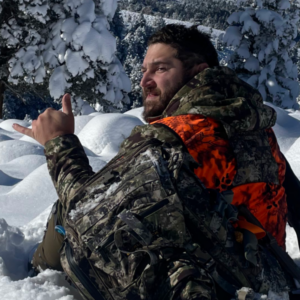
This is the first chapter in a longer story about how finding the outdoors quietly changed everything.
Growing up, my idea of the outdoors was limited. A Cub Scout camping trip in the cemetery across the street from my house. Summers in Kennebunkport, Maine, near the beach. Visits to Littleton, where my father grew up and my grandparents lived. That was nature to me. Comfortable, familiar, close to civilization.
That definition shifted when I went to Franklin Pierce University in Rindge, New Hampshire to play baseball. Compared to just outside Boston, it felt remote. Not metaphorically. Literally. Woods everywhere. Fewer people. Longer drives. Darkness that actually got dark.
It was culture shock.
I was a city kid. An athlete. Fairly popular. And if I’m honest, I didn’t really know who I was yet. I tried on identities the way a lot of people do at that age. I was a drummer. A preppy Abercrombie kid. I dipped into the Rocawear phase. Pierced ears. A sound system in my Toyota Camry worth more than the car itself. I floated between groups, interests, and versions of myself, never fully committing to any of them.
At the time, I didn’t think much of the outdoors around me. Plenty of guys on the baseball team were from Maine, New Hampshire, and central Massachusetts. They hunted and fished. I never understood the appeal of cutting a Friday night short to wake up before dawn and sit in the cold waiting for ducks or deer. It made no sense to me.
After college, I moved back home outside Boston and struggled to find my footing. I bounced between jobs. Freight trucking. Door to door vacuum sales. A brief and forgettable attempt at selling life insurance. Nightclub security. Eventually, I landed an entry-level sales role in advertising technology. I didn’t know the industry. I didn’t understand SEO or digital marketing. But it paid, and I liked the hustle.
That path led to larger roles, more responsibility, and more time inside offices and conference rooms. Client calls. Forecasts. Quarters. Performance reviews. Long days that bled into longer nights. On paper, it was progress. In reality, life was getting comfortable in a way that felt dangerous.
By 2018, I was deep into the world of advertising technology. Enterprise sales. Big accounts. Big expectations. And I felt restless. Not burned out. Not unhappy. Just aware that something was missing.
Lucky for me, my two best friends felt the same way.
Mike Ibrahim and Andrea Ciano, who everyone calls Dre, and I had already been through a lot together. We had our gun licenses. We loved food, especially meat, and more than a few steakhouses. And we all felt a little too comfortable.
Around that time, there was also a cultural shift happening. One moment that stuck with me was seeing protests outside a restaurant in Toronto simply for serving game meat. I don’t know if that was the catalyst, but it forced a conversation we couldn’t ignore. If we were going to eat meat, we wanted to understand the food chain from start to finish. No hypocrisy. No outsourcing responsibility.
So we signed up for a hunter safety course in New Hampshire.
We thought we knew what we were getting into. How hard could it be? Learn the rules. Go into the woods. Find a deer. Shoot straight. Go home successful. Simple.
With our certificates in hand, we needed a destination. I reached out to a former teammate from Maine, Garrett, who hunted. I asked where someone should go to hunt deer in Maine. I’m pretty sure he thought I was joking. He knew me as the guy with earrings and a modded Camry, not someone looking for whitetails. But he answered honestly.
“The biggest deer in Maine are in Jackman.”
I took that literally.
If you want to hunt big deer, go to Jackman.
Dre and I decided to go see what we were getting ourselves into before the season. Columbus Day weekend, 2018. We bought a Maine Gazetteer and learned about something called dispersed camping. It sounded straightforward enough. We went to REI and bought the cheapest starter kits we could find. Tents. Sleeping bags. Sleeping pads. Jetboils. Each of us had our own gear. We were clearly beginners, but confident ones.
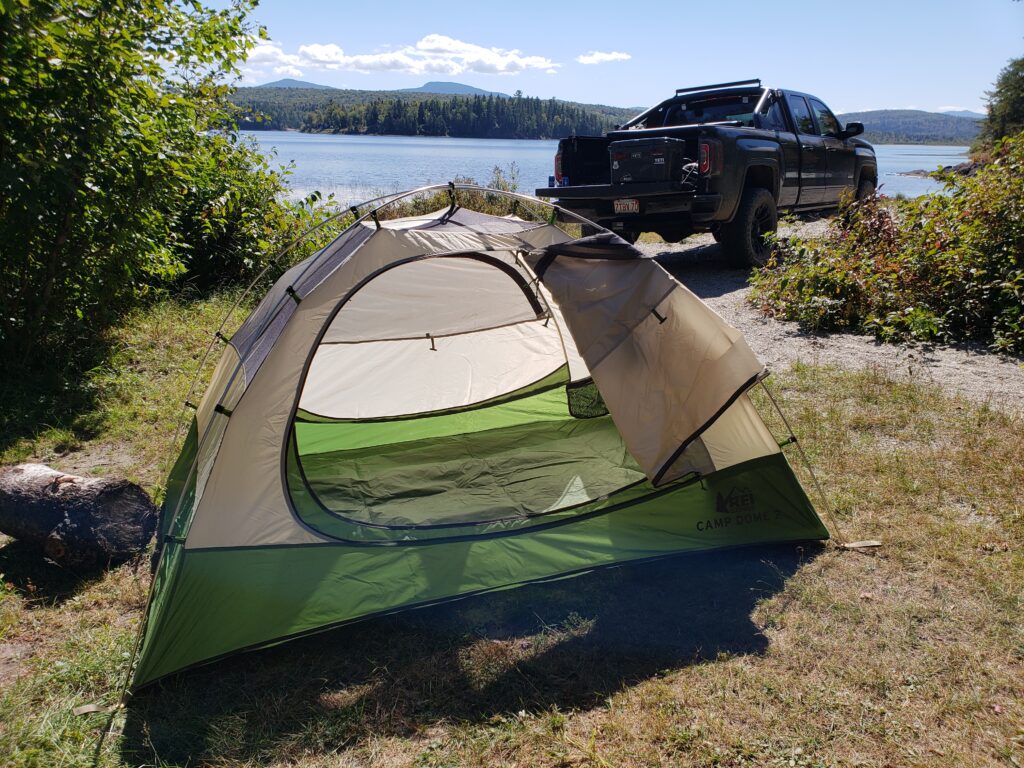
This is the campsite from the trip where everything finally slowed down.
Earlier that year, I had bought a truck. A 2017 GMC Sierra AT4X. I had started modifying it without really knowing why. Lift kit. Big tires. Fuel wheels. More lights than I knew what to do with. This trip felt like the excuse I had been waiting for.
We packed up and headed north.
If you’re familiar with Boston, you drive to Augusta, Maine, take a left, and keep going until it feels like you’ve gone too far. About an hour from Jackman, cell service disappeared. That alone made the trip feel different. But we brushed it off. Between the truck’s navigation and the Gazetteer, we figured we’d be fine.
We found a dispersed campsite next to a pond. It was quiet. Beautiful. Isolated in a way I had never experienced. We fumbled through setting up camp, got a fire going, and tried fishing without any idea what lived in the water. No bites. No frustration. Just time.
After dinner, we decided to explore the logging roads once the sun went down. We wanted to test the lights.
What we saw that night blew our minds.
Dozens of whitetail deer. Moose. A lot of moose. They had always felt mythical to me. Creatures you read about or see on signs. Jackman changed that in a single night. That’s what happens when you’re five hours from the nearest major city and miles from the closest paved road.
We went there to scout for a hunt. Instead, we stayed in the truck, watched wildlife from the roads, and convinced ourselves we had it all figured out. With what we saw that night, success felt guaranteed.
Sleep was restless. Every sound felt like a bear. But at dawn, I woke up to something I still hear clearly when I think about it.
Loons calling across the pond.
Fog hanging low over the water. Gray light. Stillness. No noise except nature doing what it has always done.
In that moment, something clicked. This place had always existed. I had just never made the effort to find it.
We packed up, left the site better than we found it, and drove the long stretch of logging road back toward pavement.
I already knew a few things.
I loved the simplicity and beauty of the wilderness. I was hooked.
I also believed we were going to go three for three on our hunt the following month. How could we not?
For the first time on the trip, we couldn’t wait to get cell service back so we could call Mike and tell him everything.
And then reality hit.
The moment service returned, so did the noise. Texts. Emails. Social media. App notifications. Promotions. Alerts from apps I didn’t even remember installing. All of it demanding attention at the same time.
That’s when it really sank in.
One notification at a time is manageable. Hundreds all at once is something else entirely. After forty-eight hours without service, the contrast was impossible to ignore. None of it felt urgent. None of it felt important. But it all demanded space in my head.
That realization stuck.
There is no better medicine for the soul than losing cell service.
I didn’t care where I went next or what I did. I just knew I needed more time outside. More distance from the noise. More moments like that morning on the pond.
We finally got through to Mike. We told him everything. And we promised him one thing.
Next time, we were coming home with venison.
We had no idea how wrong we were.