
Salomon X Ultra 5 GTX Review: A Reliable Everyday Trail Shoe
A lightweight waterproof hiking shoe for everyday trail use when you want more support than a trail runner without committing to a full boot.
 Matt Anderson
This is the shoe you grab when you don’t want to think about it.
The Salomon X Ultra 5 GTX has been in the author’s rotation for about a year, with roughly 30 to 40 hikes across local Massachusetts trail systems. It has handled rocks, roots, mud, wet leaves, and normal off-trail wandering without becoming something the author had to think about. The main caution is fit-related: occasional hotspots near the outside of the forefoot showed up on longer days.
What works. What doesn’t.
A clear look at where this gear earns its place and where the tradeoffs begin.
Pros
- Comfortable right out of the box
- No real break-in period
- Quicklace system is fast and stays put
- More supportive than expected for a low-cut hiking shoe
- Solid traction across most local trail conditions
- Waterproofing has held up through normal wet trail exposure
- Durable after roughly a year of consistent use
- Easy to wear for trail time, driving, and full-day use
Tradeoffs
- Occasional hotspots near the outside of the foot by the base of the pinky toe
- Not ideal for heavier loads or more technical terrain
- Does not provide maximum ankle support
- Not the right choice for deeper snow or real accumulation
- Wet leaves can still create some slippage
The field story
The conditions, decisions, and repeated use behind the conclusion.
A Lightweight Hiking Shoe That Feels Closer To A Trail Runner
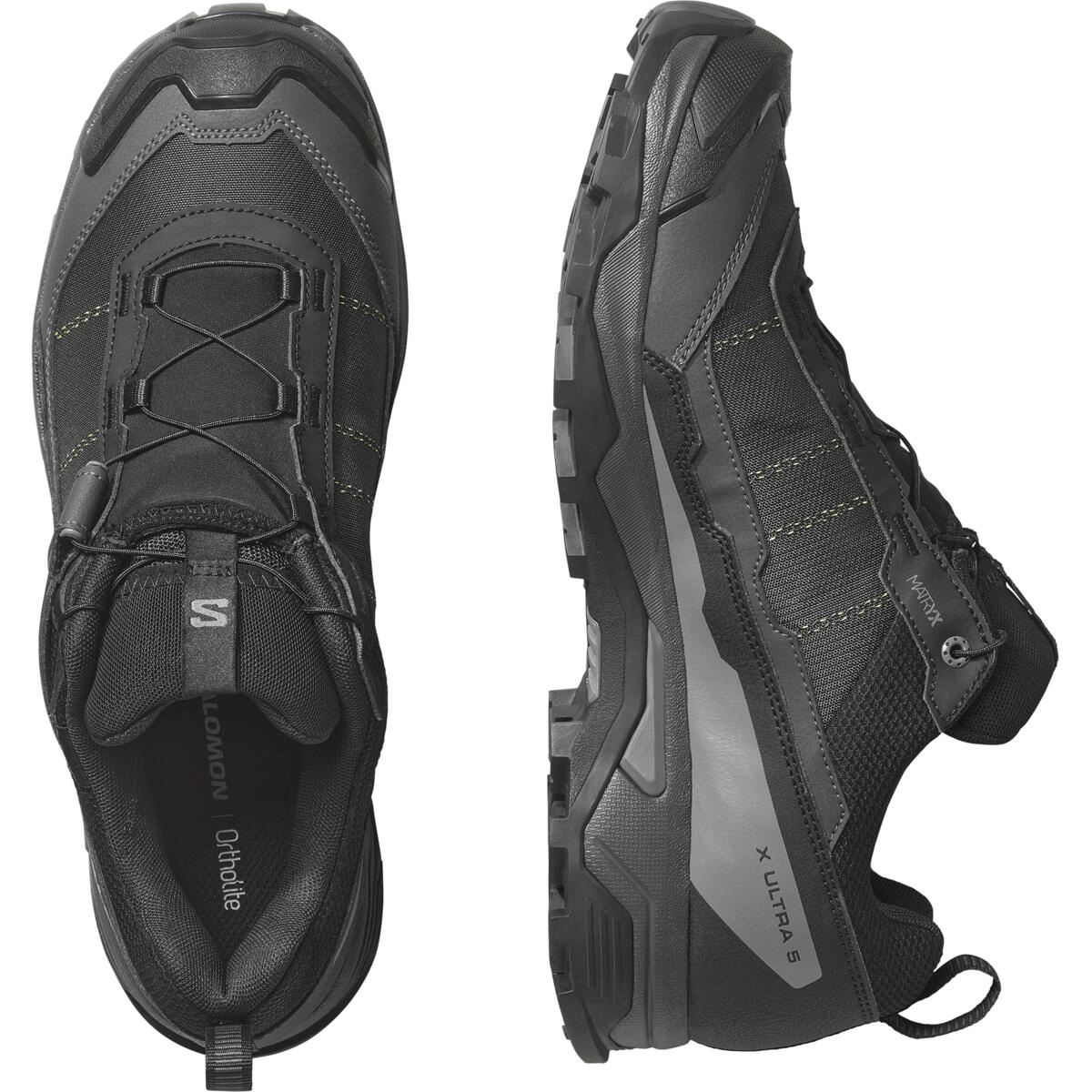
The Salomon X Ultra 5 GTX is a lightweight hiking shoe with a waterproof Gore-Tex liner and Salomon’s quicklace system. The fit is snug, almost closer to a trail runner than a traditional hiking boot, and the author found it comfortable right out of the box with no real break-in period. After about a year of use, it had broken in slightly but still felt consistent and secure.
It Covers Normal Trail Days Without Asking For Attention
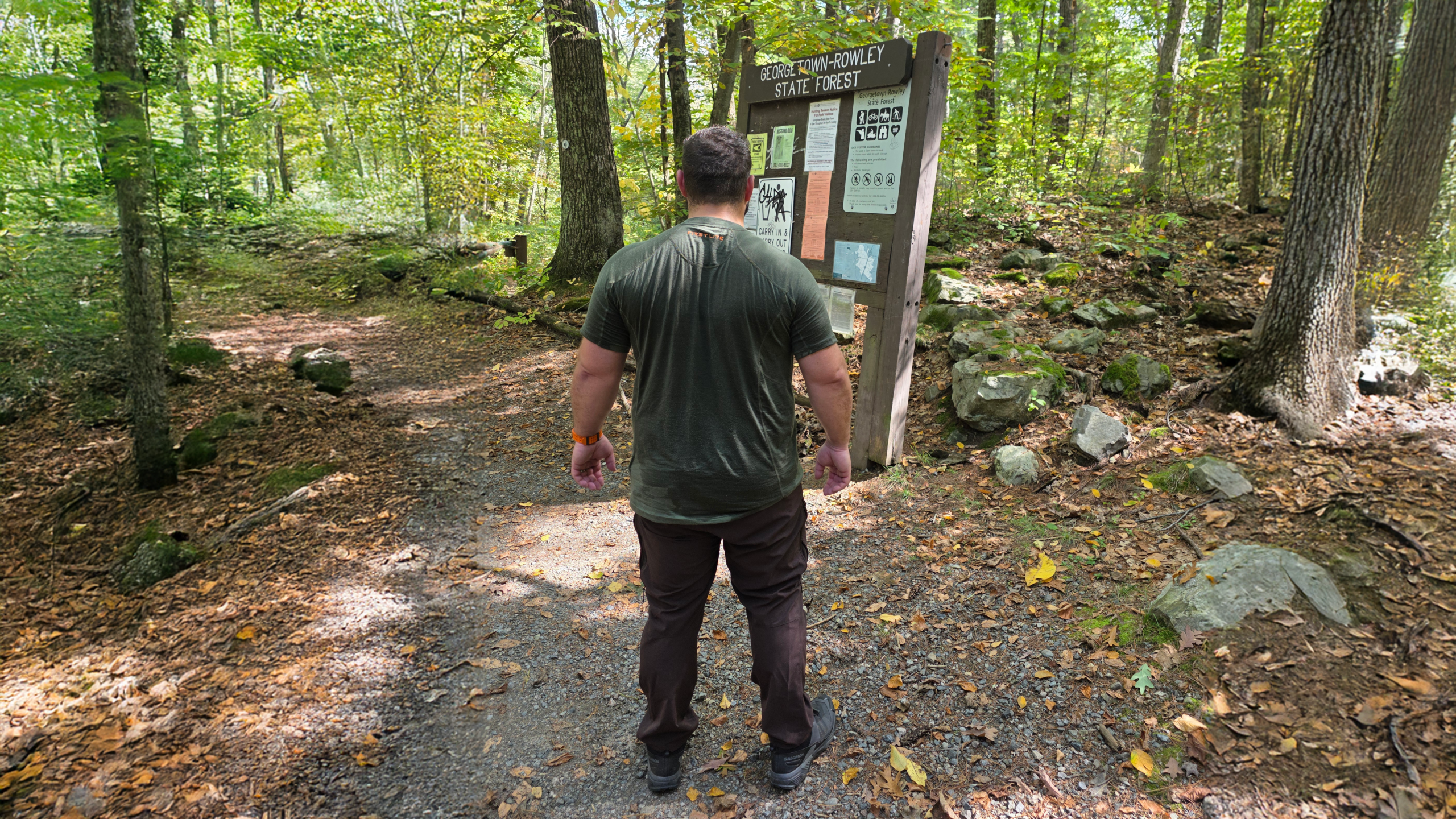
The Salomon X Ultra 5 GTX stays in the kit because it fits the kind of hiking most people actually do: short hikes, quick trips, local trails, and days that mix driving, walking, and trail time. It is lighter and easier to live in than a full boot, but still supportive enough that the author never felt underbuilt on normal Northeast terrain. For hunting, heavier terrain, deeper snow, or real accumulation, the Crispi Guide GTX still has its place — but for everyday trail use, the Salomon keeps earning the easy grab.
The alternatives and the tradeoff
The closest alternatives are shoes like the Merrell Moab Speed 2 GTX, La Sportiva Spire GTX, and HOKA Anacapa 2 Low GTX. They all sit in that middle ground between a trail runner and a traditional hiking boot, but they lean in slightly different directions.
I would choose the Salomon when I want a snug, athletic fit, quicklace convenience, and a shoe that feels light without giving up too much structure. The HOKA makes more sense if cushioning and all-day comfort are the priority, while the La Sportiva is a better fit for someone who wants a more substantial, technical feel underfoot. The Merrell is probably the closest all-around alternative for someone who wants similar versatility with a more traditional lacing setup.
For normal Northeast day hiking, the Salomon still hits the balance I want best.
Performance metrics
The shoe felt comfortable right out of the box, broke in slightly, and still felt good after about a year of use.
The quicklace system was fast, simple, and stayed put without needing mid-hike retightening.
Traction was solid across rocks, roots, loose dirt, mud, and normal off-trail wandering, with slight slipping noticed on wet fall leaves.
Wet trails, muddy sections, and normal exposure did not create any noticed Gore-Tex failure.
After roughly a year of consistent use across 30 to 40 hikes, the shoe was holding up without major durability concerns.
Key takeaways
More Support Than Expected
Coming from a full-height boot, the author expected more compromise. For normal trail use, the shoe felt secure enough that support stopped being a concern.
Built For Low-Friction Trail Days
This is the shoe for short hikes, quick trips, and mixed days where trail time blends with driving and running around.
Waterproofing Stayed Quiet
The author did not seek out water, but wet trails, mud, and normal exposure never created a moment where the Gore-Tex liner felt like it had failed.
Wet Leaves Still Win Sometimes
Traction held up across most conditions, but late-fall wet leaves in Georgetown-Rowley created some slight slipping in spots.
Watch The Forefoot On Longer Days
The main comfort issue showed up as occasional hotspots near the outside of the foot by the base of the pinky toe, especially on longer outings with driving on both ends.
The Shoe You Grab When You Don’t Want To Think About It
The Salomon X Ultra 5 GTX is not trying to replace a full boot for hunting, heavy loads, or winter accumulation. It earns its place because it handles normal trail days without drawing attention to itself — comfortable, supportive, waterproof enough for regular exposure, and easy to wear from the drive to the trail and back again.
FAQ
Is the Salomon X Ultra 5 GTX comfortable out of the box?
Yes. The author found there was no real break-in period. The shoes felt comfortable immediately, loosened slightly over time, and still felt good after a year of use.
Does the quicklace system stay tight?
In the author’s experience, yes. Once set, the quicklace system stayed put without needing retightening during hikes.
How does the Salomon X Ultra 5 GTX handle wet Northeast trails?
It handled wet trails, muddy sections, rocks, roots, and wet leaves well overall. The only notable traction issue was slight slipping in spots during a late-fall hike when wet leaves covered the trail.
Has the Gore-Tex waterproofing held up?
The author has not gone out of the way to test water exposure, but normal wet trails, mud, and trail moisture have not caused a noticed waterproofing failure.
Is this a replacement for a full hiking or hunting boot?
No. The author still sees a full-height boot like the Crispi Guide GTX as the better choice for hunting, rougher terrain, heavier loads, deeper snow, and real accumulation.
Who should consider this shoe?
It fits day hikers who want a lightweight, comfortable, waterproof shoe with more structure than a trail runner but less bulk than a traditional hiking boot.
What is the biggest downside?
The biggest issue has been occasional hotspots on the outside of the foot near the base of the pinky toe, especially during longer 4 to 5 mile days combined with an hour drive each way.
KEEP EXPLORING